The tie symbol, pickup notes and The Banks of the Ohio are on the menu today!
Kremona Mari Tenor | Peter Kun Frary
Pickup Notes
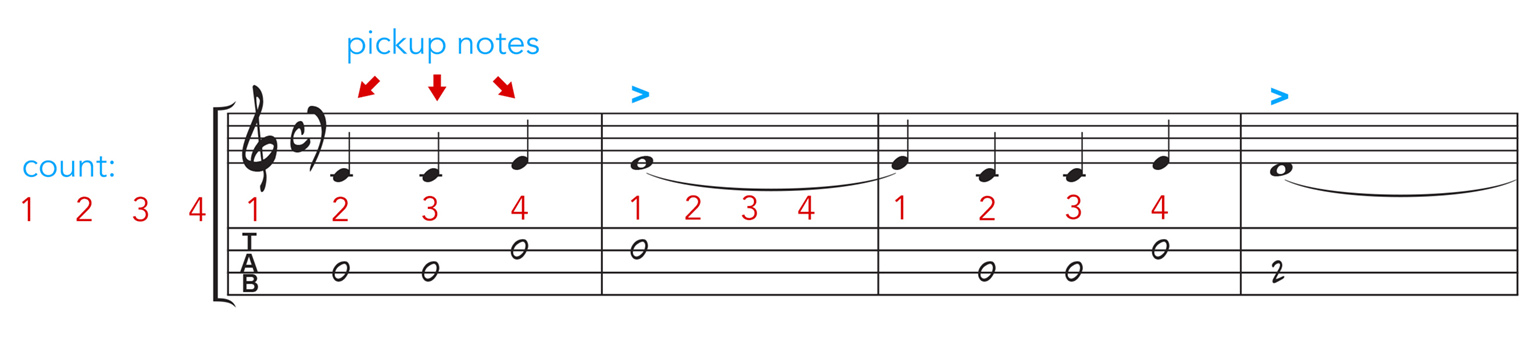
The Banks of the Ohio is in common time—4/4 meter—but begins with an incomplete measure of only three beats. The notes in this incomplete measure are called pickup notes.
To play the pickup, count 1-2-3-4-1 and start the first pickup note on beat 2.
Pickup Note Example | Pickup notes in The Banks of the Ohio.
The final measure of The Banks of the Ohio has only one beat, rather than four. Why? So you can repeat back to the beginning and connect seamlessly to the pickup note on beat 2.
The Banks of the Ohio tips and demonstration
Tied Notes
The tie is a curved line connecting notes of the same pitch. The tie combines two or more notes into one sustaining tone. To play a tie, pluck the first note and hold it for the combined value of the tied notes. Thus, in the example below, the whole note (4 beats) is tied to a quarter note (1 beat), yielding a 5 beat sustain: 4 + 1 = 5.
The most important aspect of playing a tie is keeping track of the beat. Vocalize beat numbers and measure the sustain of the tied notes against your counting. With experience, you'll be able to feel five beats but, until then, counting is the best way to keep accurate rhythm.
Study Tips
The Banks of the Ohio Melody
The iconic American folk song, The Banks of the Ohio, has been recorded by Johnny Cash, Dolly Parton, Joan Baez and many others.
I asked my love to take a walk To take a walk, just a little walk Down beside where the waters flow Down by the banks of the Ohio
This charming but simple melody is based on a four-note rhythmic motive and features notes on the second and third strings.
Repeating Four-Note Motive
As noted above, the main challenge is counting out the 5-beat sustain of tied notes. Once you master the rhythm of the first two measures, the remainder of this piece is duck soup: the rhythmic motive is repeated with slight variations seven more times.
Listen to the Track
Before practicing, listen to the track so you can absorb the sound and feel of The Banks of the Ohio.
Practice the melody until it flows smoothly. Play along with the audio track or video to help polish your rhythm.
Once the melody is solidly beneath your fingertips, begin learning the chords.
Chords
Strum
On the audio track I use the Simple Strum 4/4 the first time through: one thumb strum per measure on beat one: strum-2-3-4 | strum-2-3-4 | etc. On the repeat I increase strum frequency to two strums per measure, i.e., Down 2X Strum.
Down 2X Strum | Begin strumming after the pickup notes.
I recommend that you stop strumming chords during the pickup notes. When an instrument becomes temporarily silent, it is called a tacet. The tacet is a dramatic device and also helps the pickup notes pop during song repeats. For best results, mute the strings during the tacet by touching them with the palm of the right-hand.
Study Question
How many beats does the combination of two tied notes receive in The Banks of the Ohio? [answer below]
 •••
•••


 Tied Notes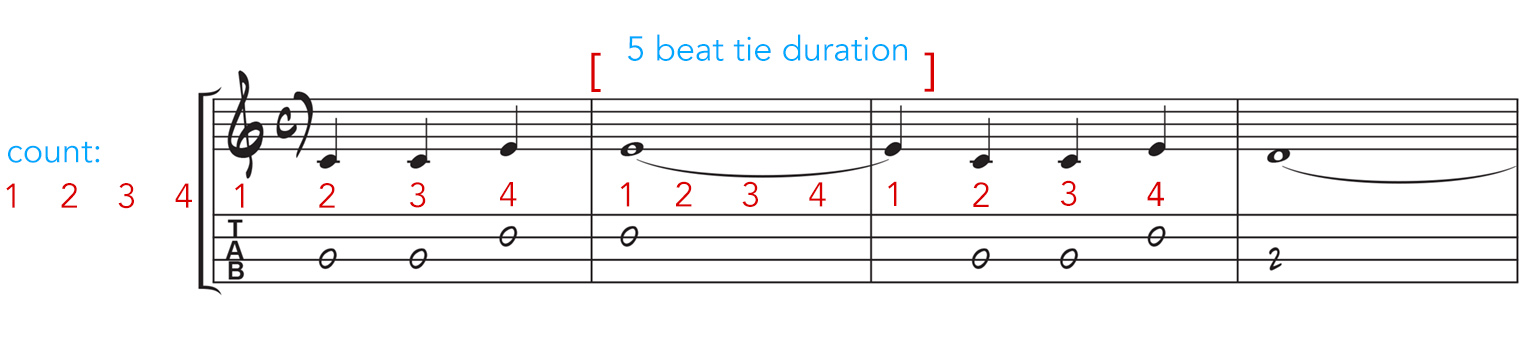
 The Banks of the Ohio Melody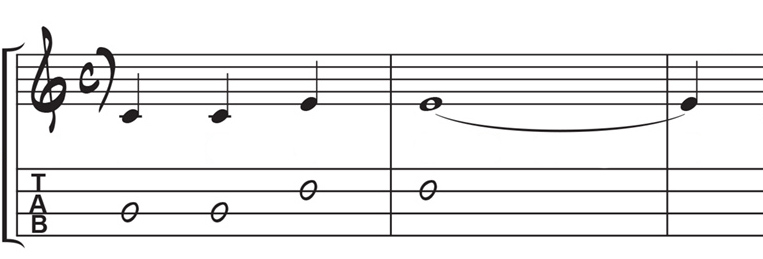
 Listen to the Track
 Play the Melody Now!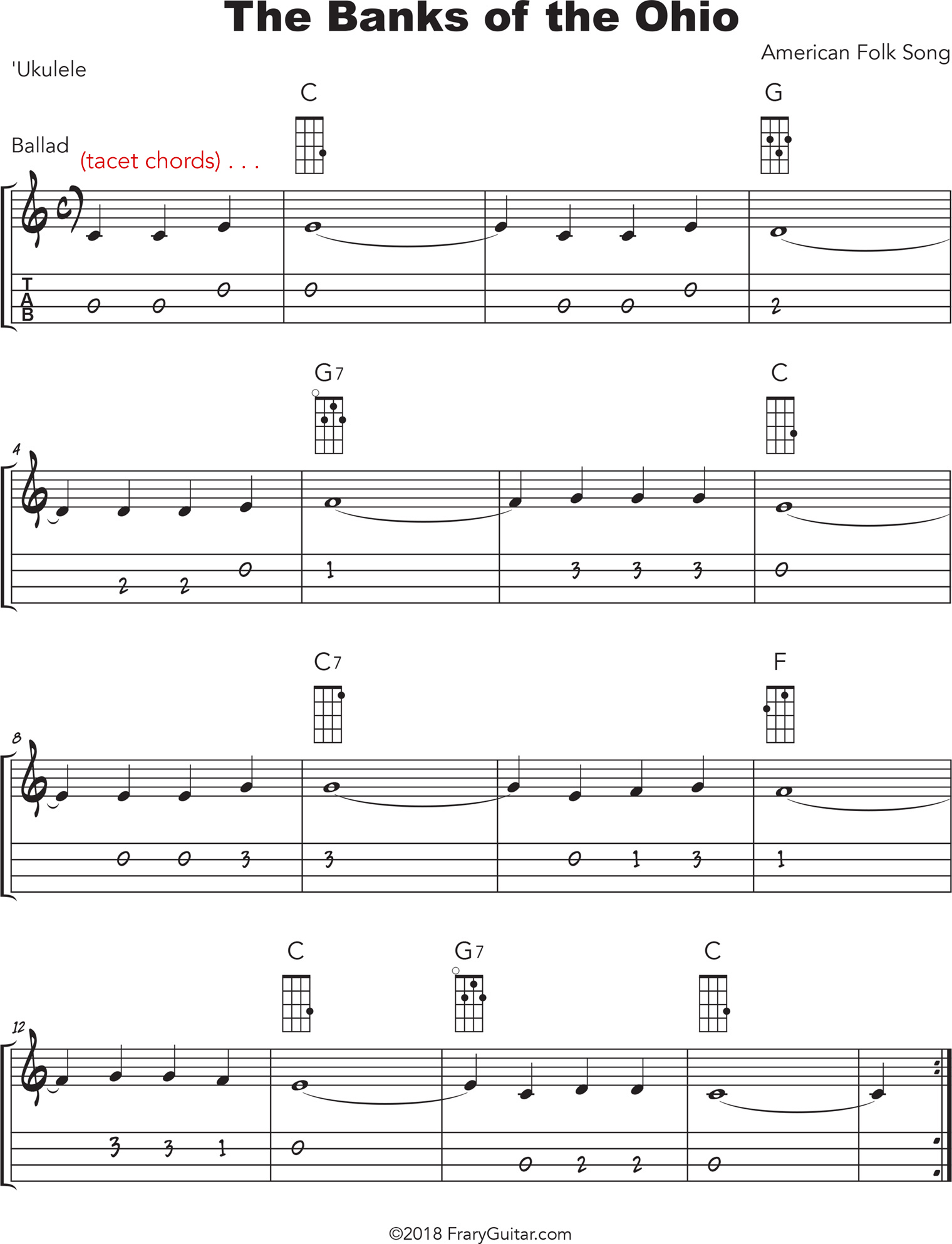
 Strum
Strum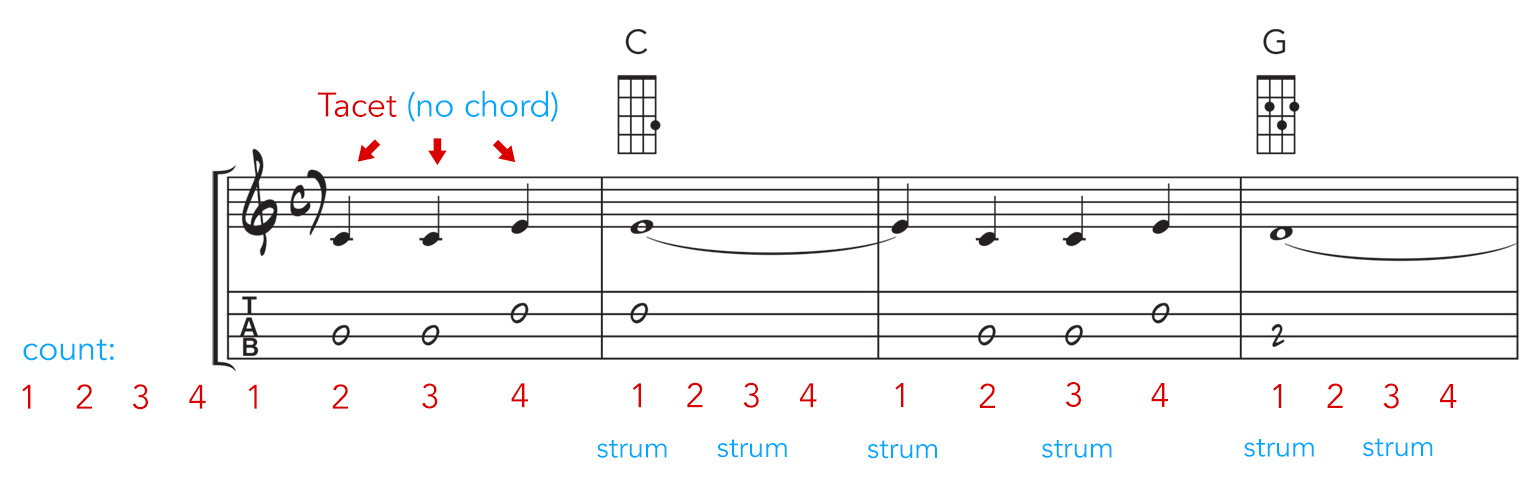

 Daily Review
 Answer