Now that you have learned the basics of playing Sanoe in the upper positions, it's time to take on something new: ensemble playing. One of the most enjoyable aspects of music making is playing with other musicians in an ensemble. Ensembles are a team effort and require musical and social cooperation between players.
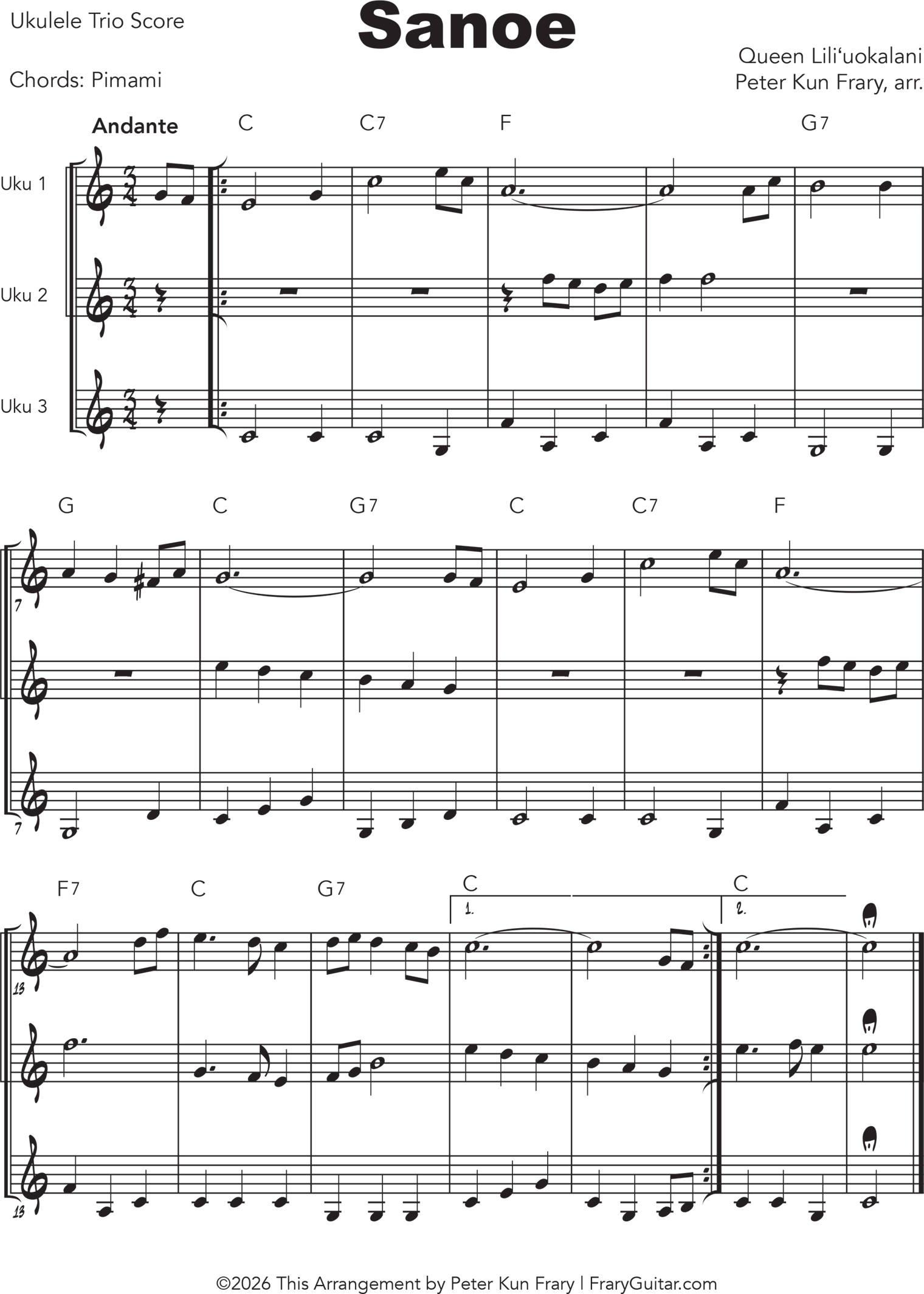
Sanoe is arranged as a trio; that is, a piece with three separate ʻukulele parts: ʻukulele 1 (melody), ʻukulele 2 (countermelody) and ʻukulele 3 (bass). An optional P-i-m-a-m-i arpeggio on the chords may be included as a fourth part if a player is available. Your professor will assign the appropriate parts during class.
Low G Tuning
For the ensemble arrangements in this textbook, the ʻukulele 3 parts are written for low G tuning. Some of the ʻukulele 2 parts also require low G tuning. However, most of the ʻukulele 1 parts work perfectly in both high G tuning (re-entrant) and low G tuning.
Notes on the 4th String (low G)
Sanoe is a ballad should be played at an andante tempo (relaxed walking pace).
Rest Symbols
Symbols called rests are used in the ʻukulele 2 part. A rest is a measured period of silence. Rests are common in ensemble music.
Sanoe Rests| ʻUkulele 2 is silent for over 2 measures while ʻukulele 2 and 3 play the first phrase.
Rest Names
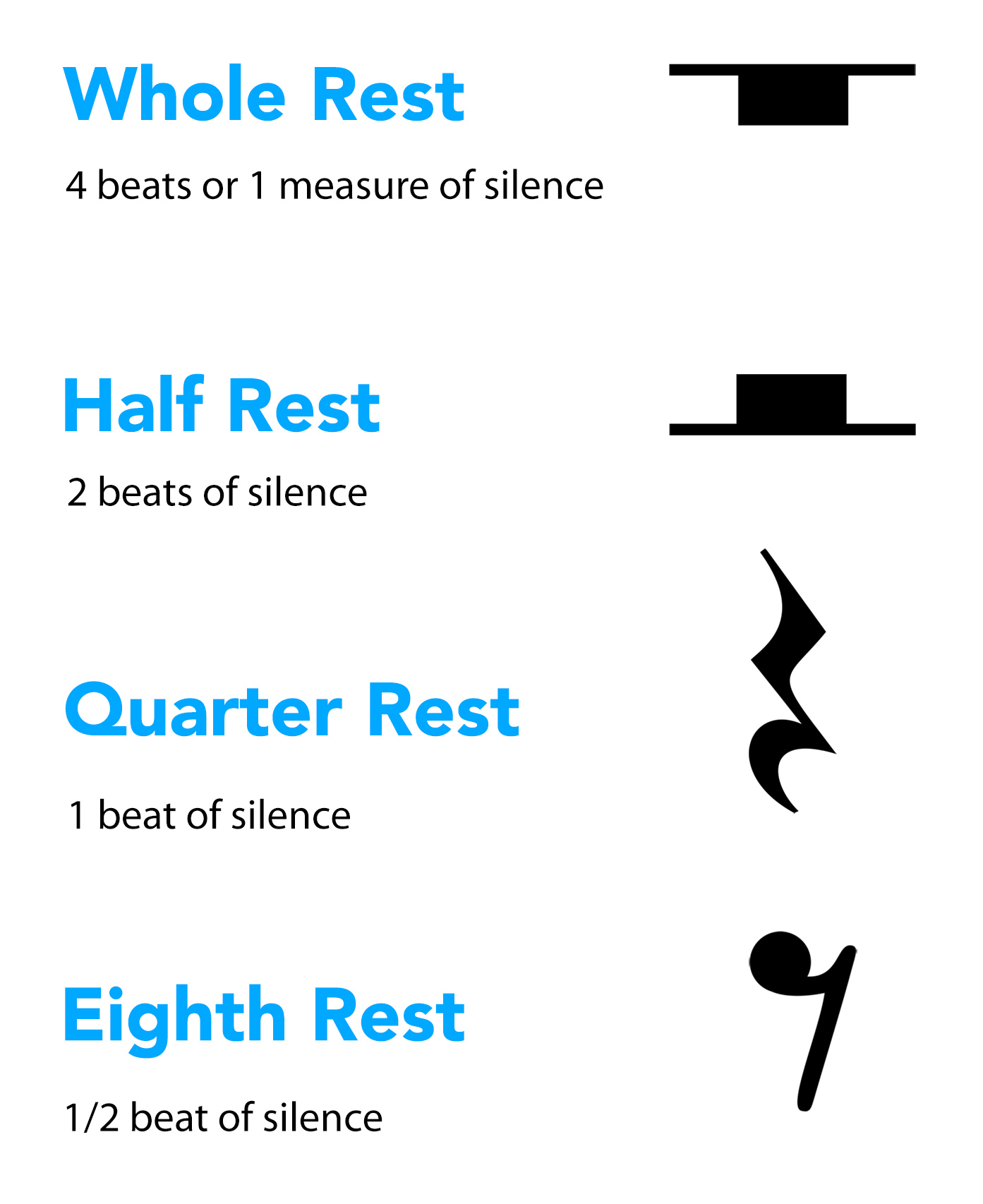
Memorize the names and values of the rest durations below: whole rest, half rest, quarter rest and eighth rest.
Beat durations are for quarter note meters, e.g., 2/4, 3/4 and 4/4.
The whole rest always indicates an entire measure of silence. For example, a whole rest in a 4/4 meter is worth 4 beats whereas in 3/4 meter it gets 3 beats.
Playing Rests
How do you play a rest? You don't! You simply count out the rest duration and play when the notes begin. If a note is ringing over a rest, touch the string to stop it from ringing (or lift the fretting finger off the note).
Listen to Sanoe
My Leeward CC ʻukulele class recorded this wonderful performance of Sanoe in March 2020, a few days before pandemic panic closed classroom teaching.
Sanoe | Leeward CC ʻukulele students.
Practice
Once you've worked out the mechanics of this piece, practice with the audio or video recordings.
The full score, used by the director, shows the relationship between the individual ʻukulele parts. The individual parts, with notes and TAB, may be be downloaded from the links at the bottom of this page.
 •••
•••
 Ensemble Musings
 Notes on the 4th String (low G)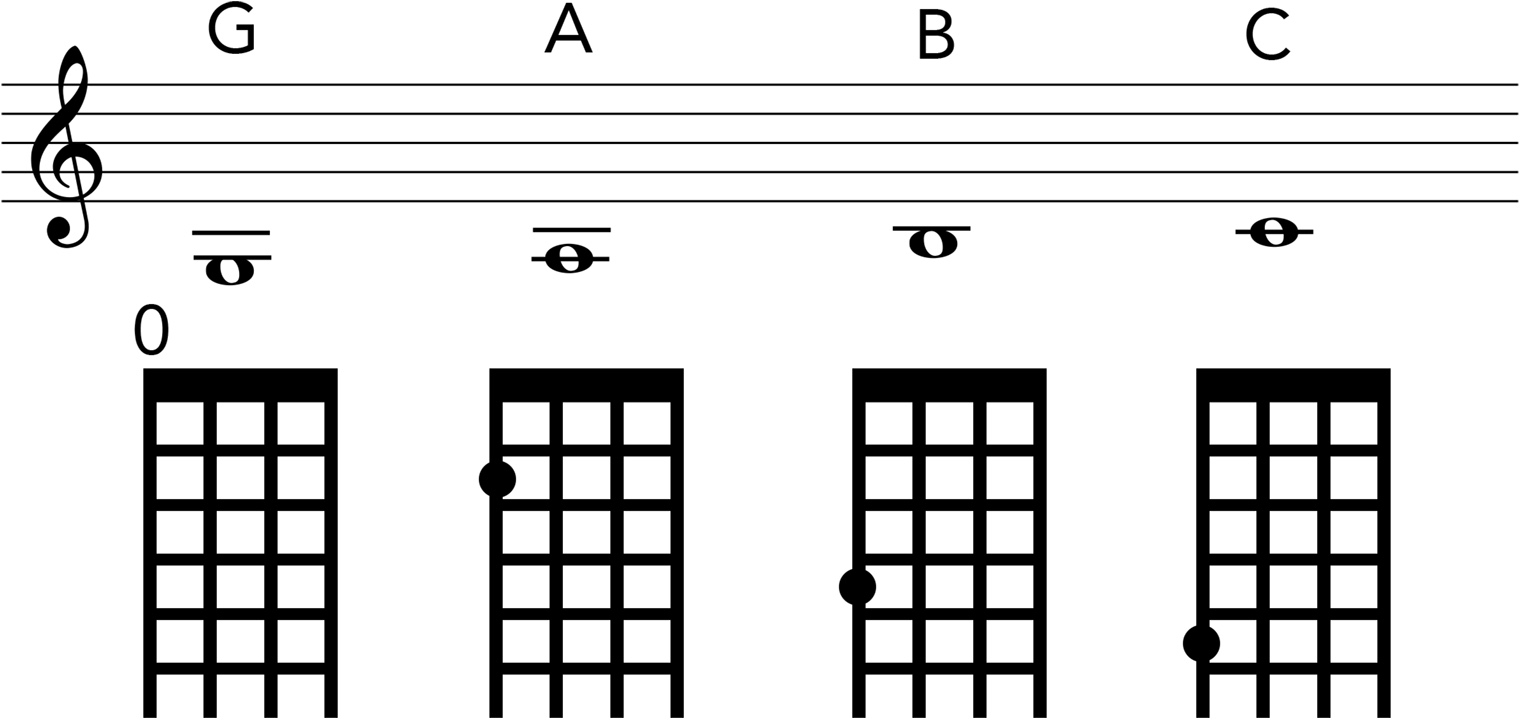
 Rest Symbols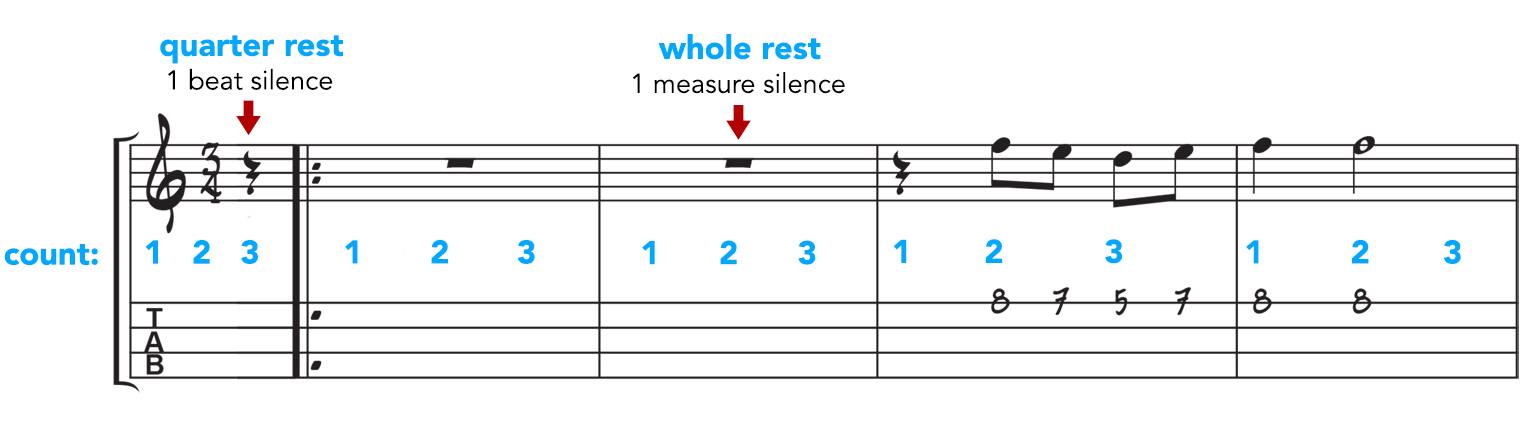
 Playing Rests
 Listen to Sanoe
 Practice