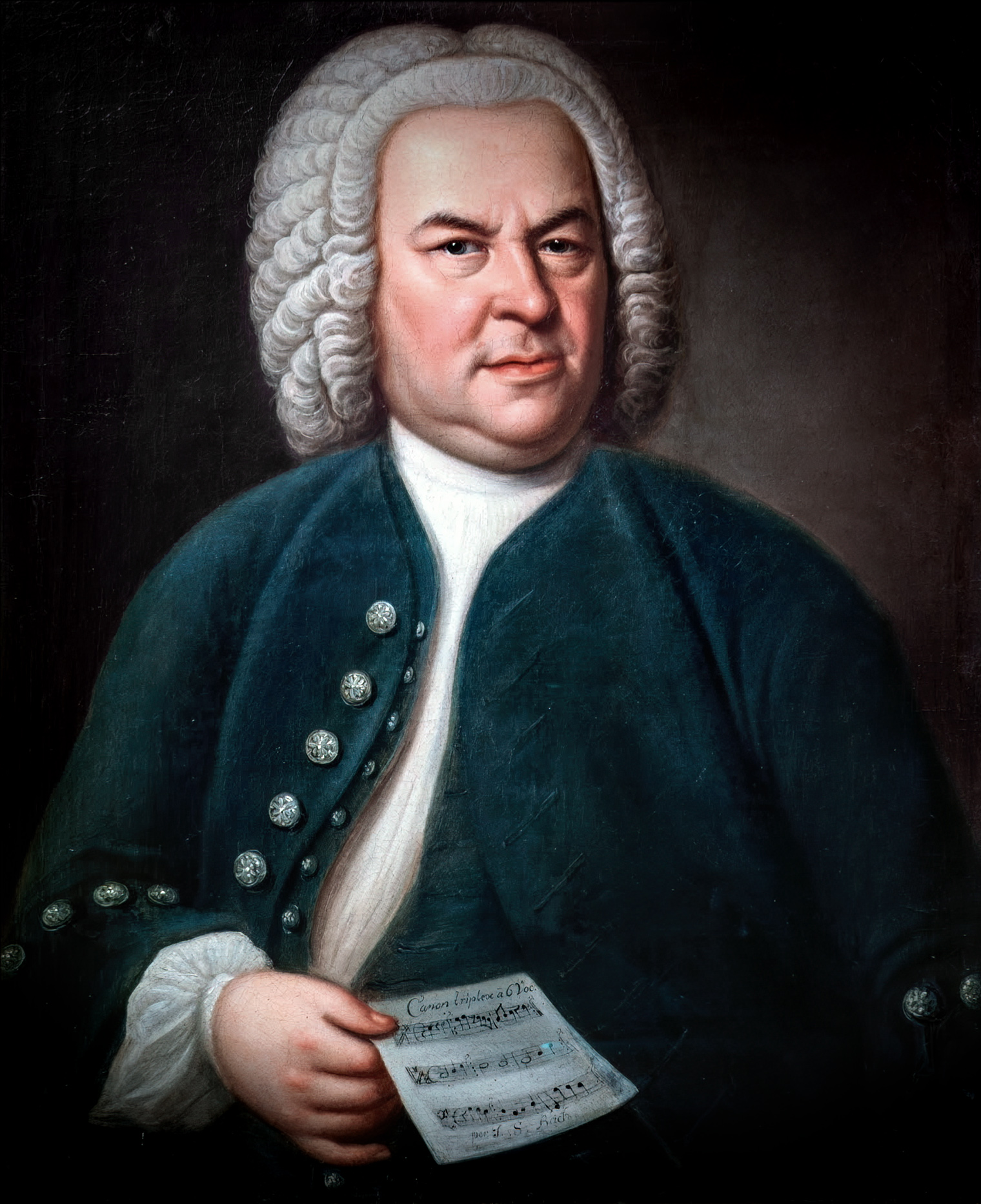
Johann Sebastian Bach was born in Eisenach, Germany, to a family of musicians spanning six generations from the sixteenth to nineteenth centuries. His best-known works are the Brandenburg Concertos, Orchestral Suites, and his many Cantatas.
French Suite No. 1 BWV 812 | Johann Sebastian Bach's autograph manuscript of a keyboard Sarabande (1722) | Bach-Archiv Leipzig
Cantata
In the Baroque Lutheran Church, the cantata was a large vocal work with soloists, choir and orchestra. Bach wrote over three hundred cantatas. Jesu, Joy of Man's Desiring is an arrangement of the ritornello (theme) from Bach's Cantata No. 147.
Study Tips
Low G Tuning
Due to the wide range of Bach's melody, this arrangement is optimized for ʻukuleles in low G tuning. If your instrument is strung in re-entrant or high G tuning, you can still play it but will hear an octave displacement of notes on the G or fourth string.
Notes on the 4th String (low G)
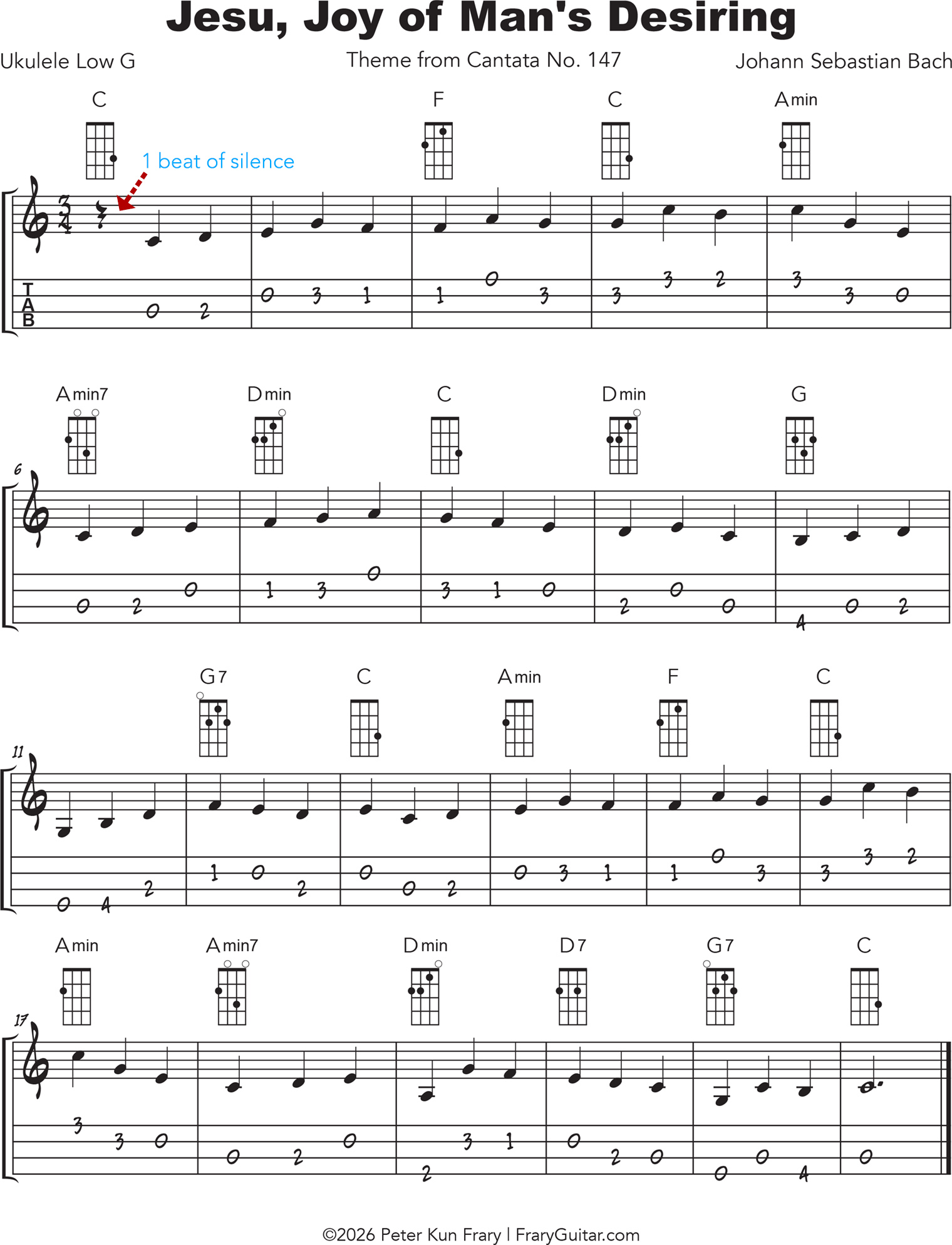
Jesu Ritornello (theme)
The ritornello of Jesu, Joy of Man's Desiring consists of flowing quarter notes. The constant motion, pinkie stretches to the low G string, and triple meter feel can be taxing, so take it slow at first. Accent the downbeat just enough so the triple meter swings like a pendulum.
Tempo
Jesu, Joy of Man's Desiring sounds best performed at a brisk allegro tempo (120 BPM+). Begin practicing at a slow tempo and gradually work up to allegro.
Quarter Rest
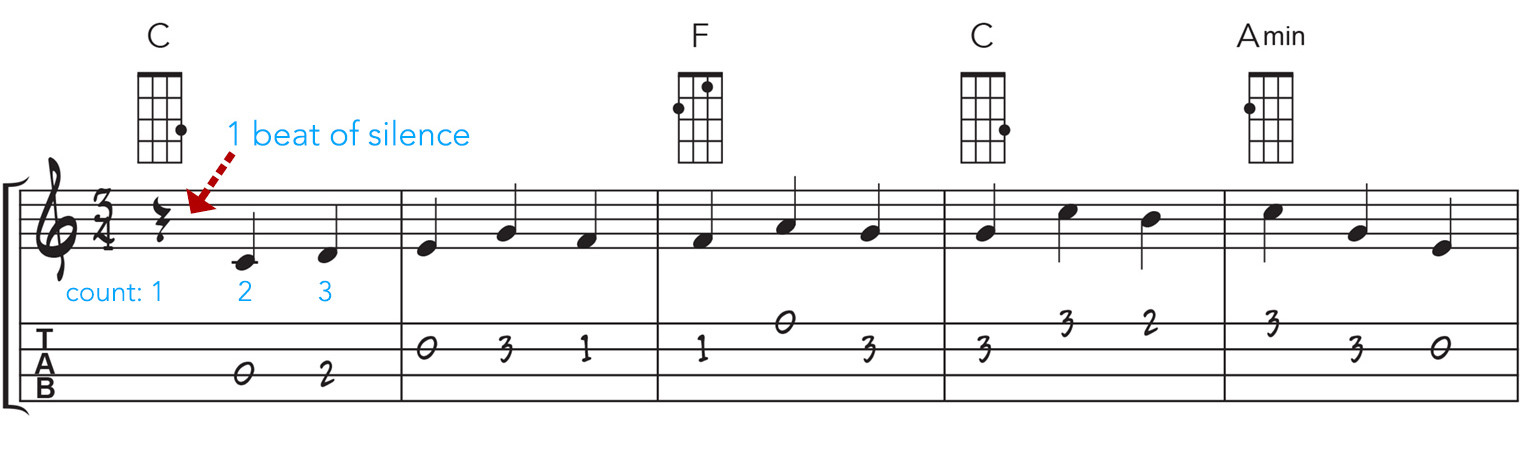
The first beat 1 of Jesu, Joy of Man's Desiring is a quarter rest, i.e., one beat of silence. You'll hear a C chord on beat 1 and should begin the melody on beat 2.
 •••
•••
 Back to Bach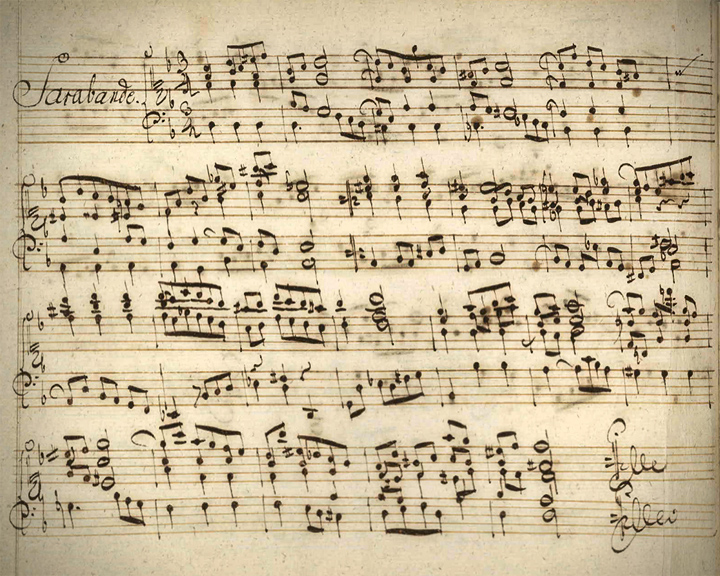
 Study Tips
 Notes on the 4th String (low G)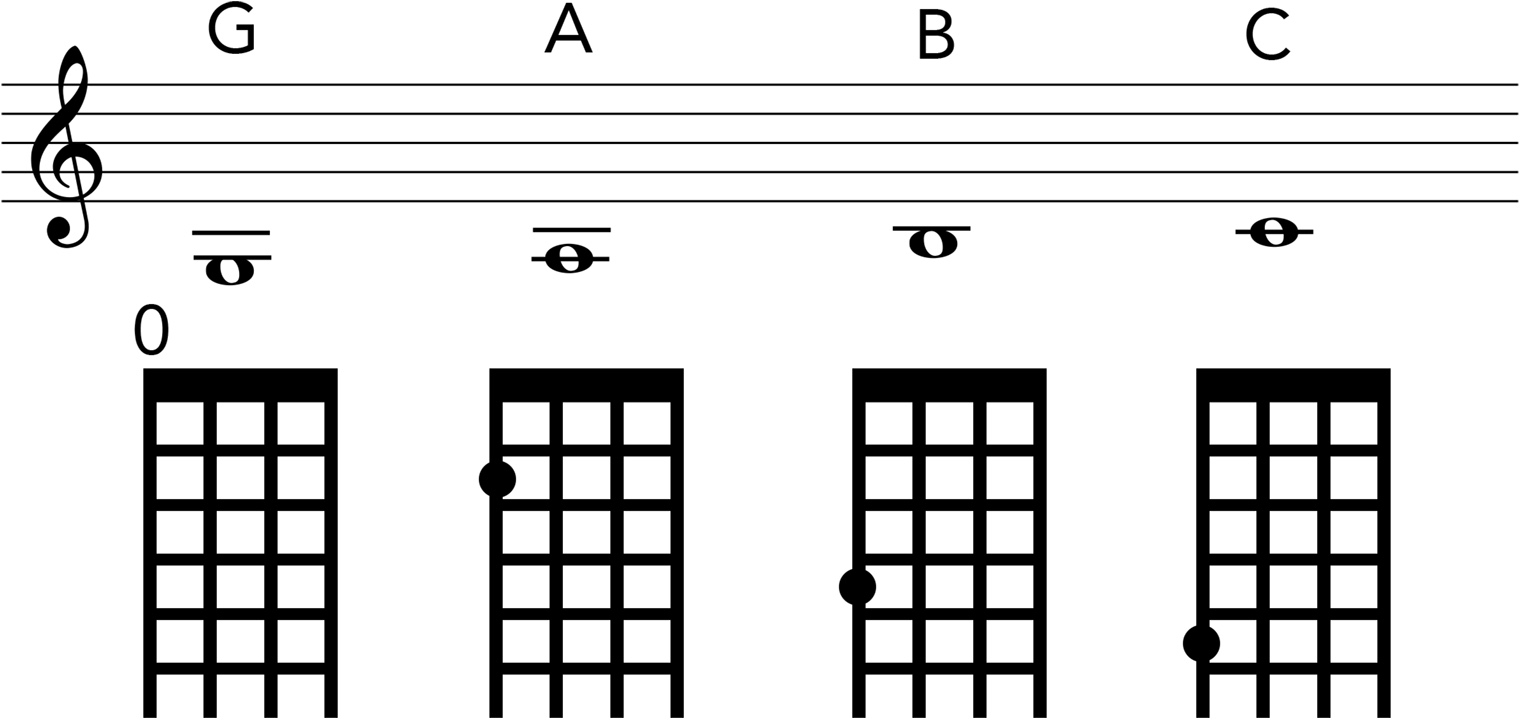
 Jesu Ritornello (theme)
  Tempo
Tempo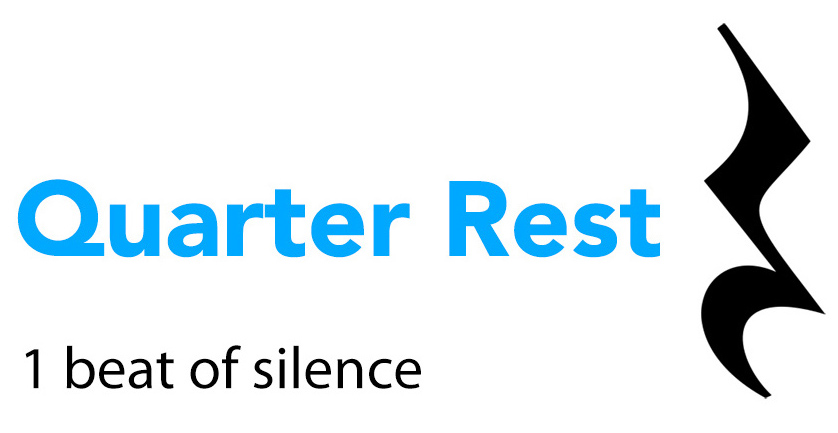
Listen to the Track

 Chords
Daily Review