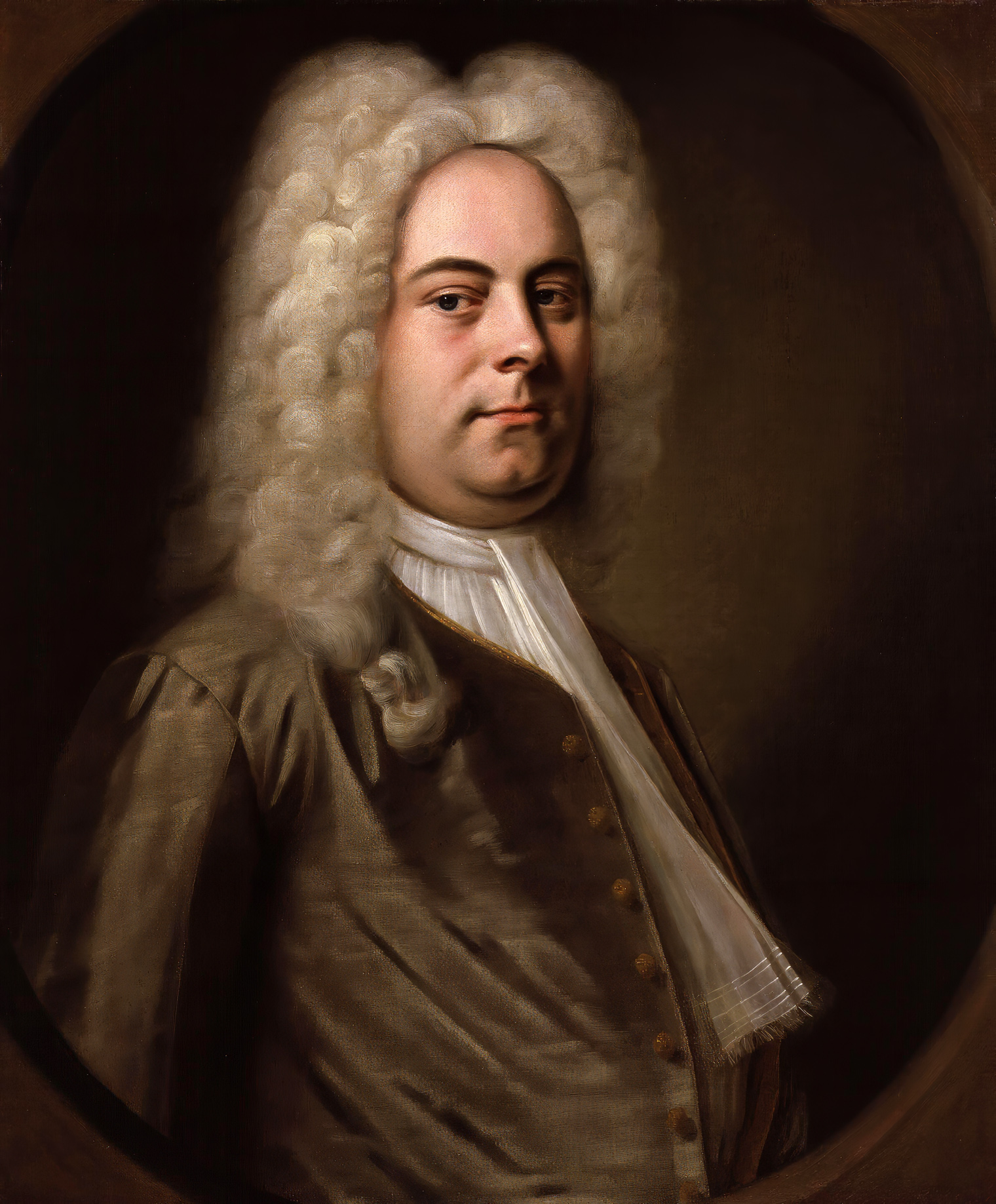
George Frideric Handel (1685-1759) was born in Halle, Germany, to a middle-class, non-musical family. He exhibited musical talent as a child but studied music in secret due to his father’s objections. He was forced to hide a clavichord (small keyboard instrument) in the attic in order to practice.
Handel achieved great fame during his life, traveled extensively, and earned a comfortable living. As a composer, he was prolific and excelled in every genre, especially opera and oratorio. He is perhaps best known for his Water Music Suite and oratorio, Messiah.
Study Tips
Sarabande
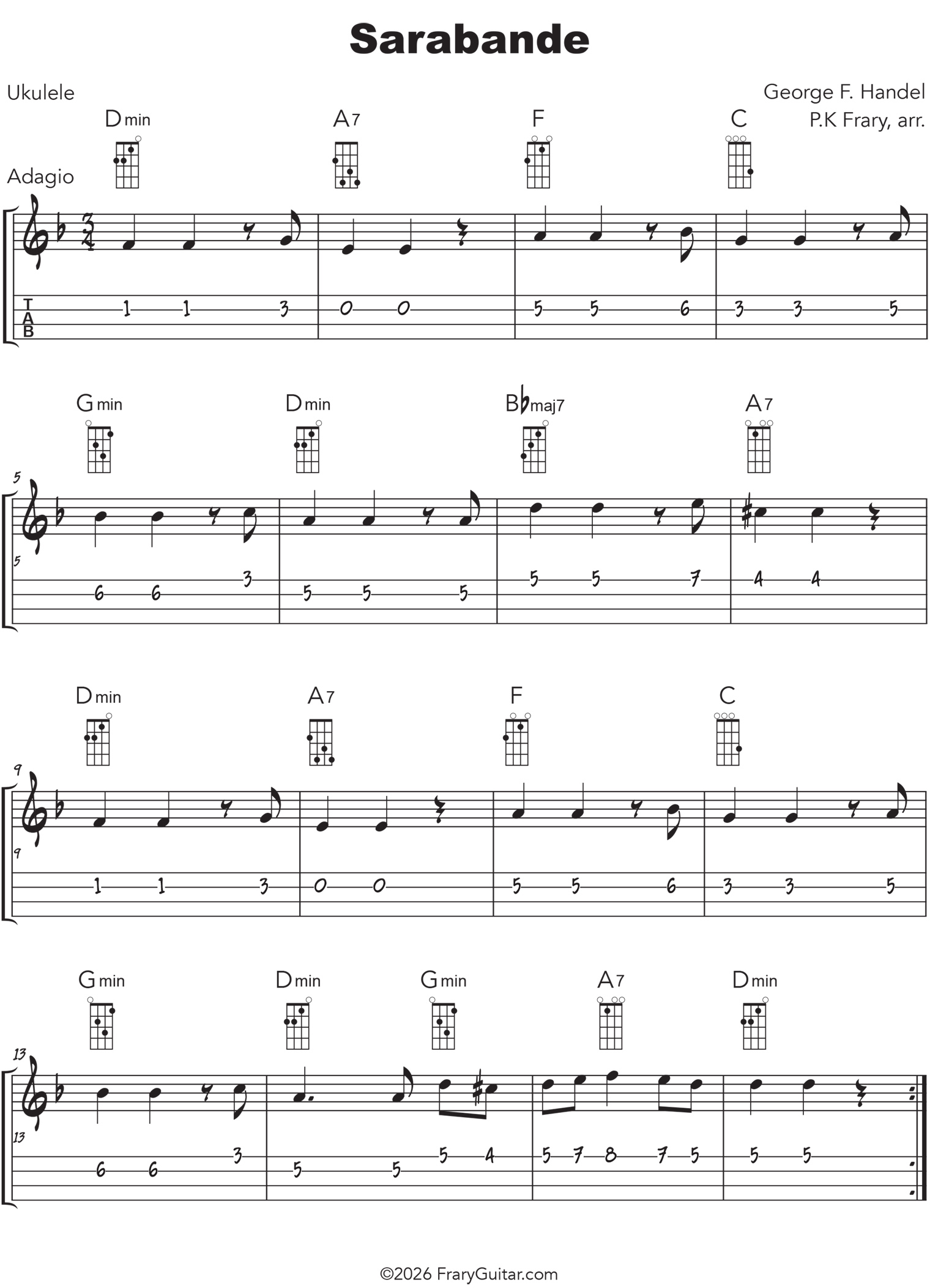
The sarabande is a slow, stately Spanish dance in triple time, peaking in popularity during the seventeenth and eighteenth centuries in Europe. Handel's sarabande is one of the best known, but there are literally thousands of sarabande dances written by Handel's contemporaries such as Bach, Corelli, Vivaldi, and many others.
With practice, the slow-moving melody of Sarabande will soon fall under your fingertips. Because this is a dance, the rhythms are highly repetitive. For example, the first two measures form the rhythmic motive or motive fragments used throughout most of this piece.
Indeed, once you have mastered the rhythm of the first two measures, you have mastered the rhythm of most of this piece.
Fifth Position
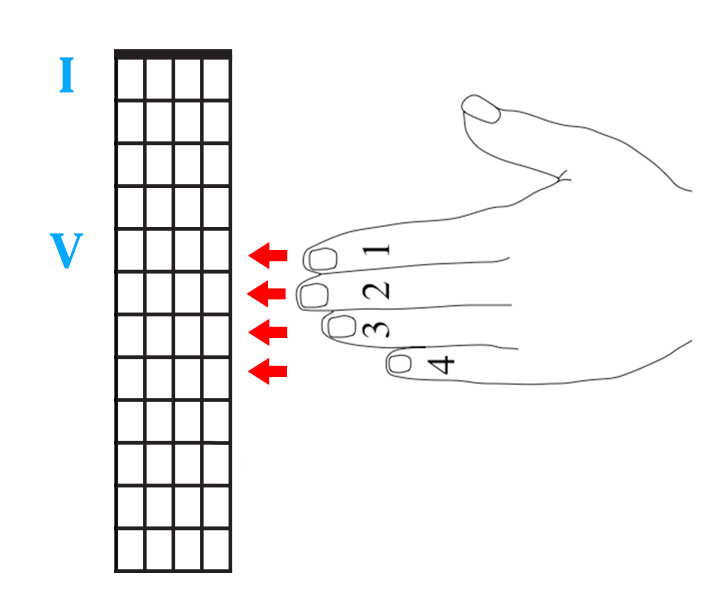
Some sections of Sarabande require use of the fifth position. For a refresher on fifth position notes and associated techniques, review Sanoe and the Fifth Position chapter.
Alternate between the middle (m) and index (i) fingers to pluck the melody.
Tempo
Work towards a tempo goal of andante, i.e., moderately slow.
Chords
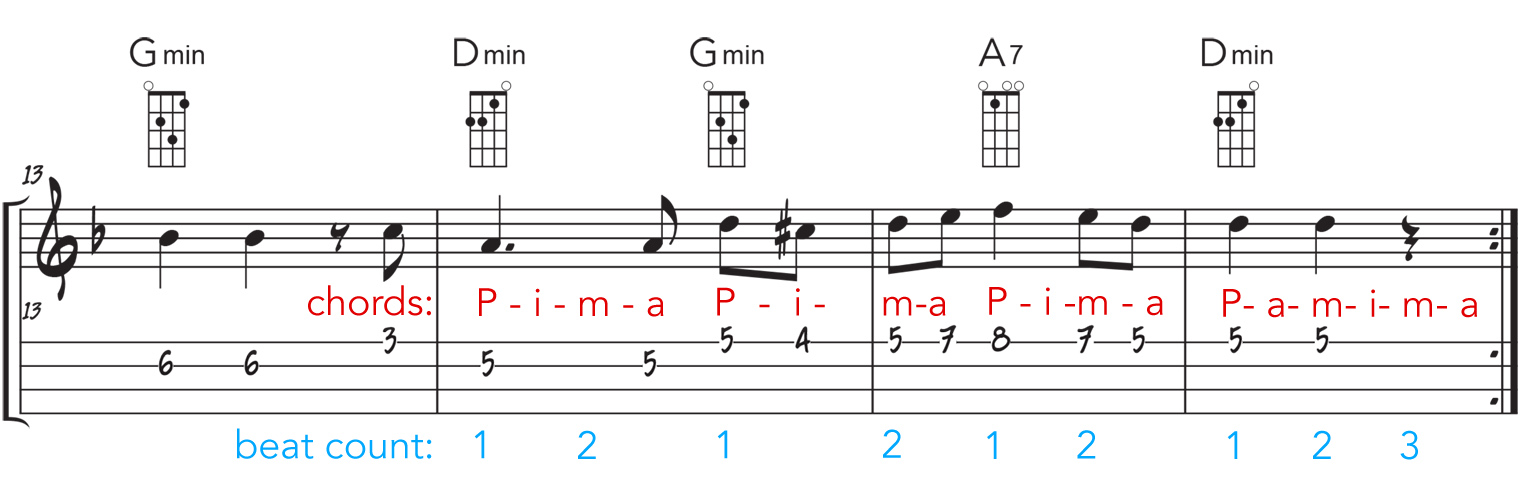
I recorded Sarabande using arpeggiated chords in a P-a-m-i-m-a pattern. You may also use the P-i-m-a-m-i pattern you learned earlier or simply strum on the downbeat, i.e., every three beats.
The metric feel briefly changes to duple at measures 14 and 15, requiring a strum every two beats or a switch to P-i-m-a. The triple meter feel resumes at measure 16.
 Musings
 Study Tips
 Sarabande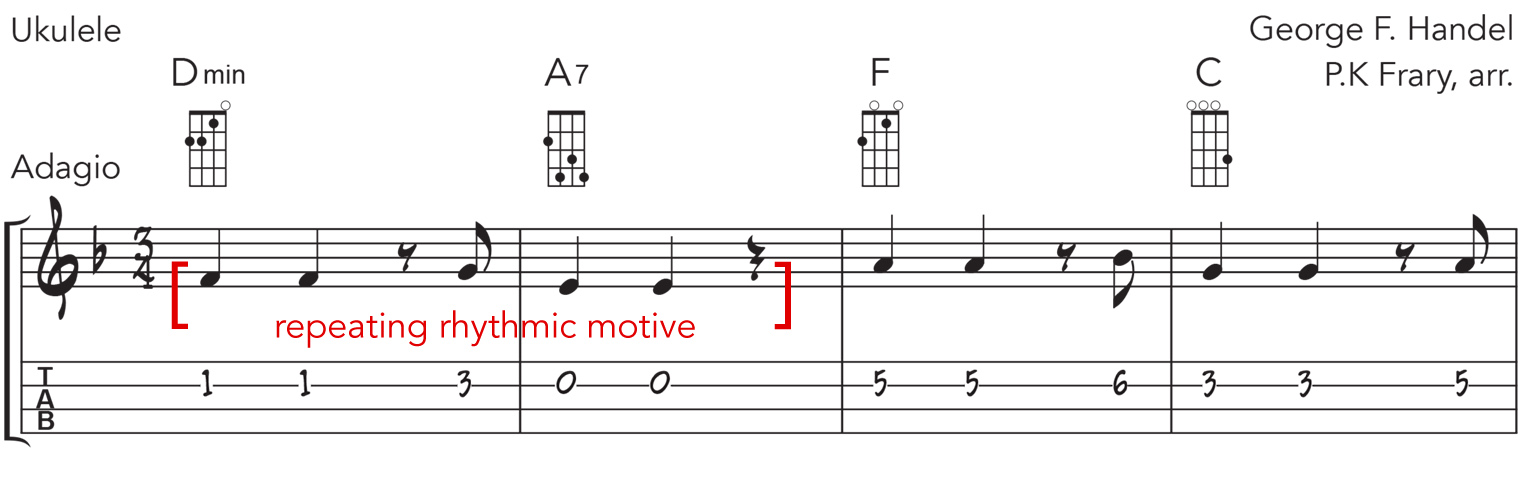
Tempo
Chords
Listen to the Track
Click for a direct link to the audio track.
Play Now!