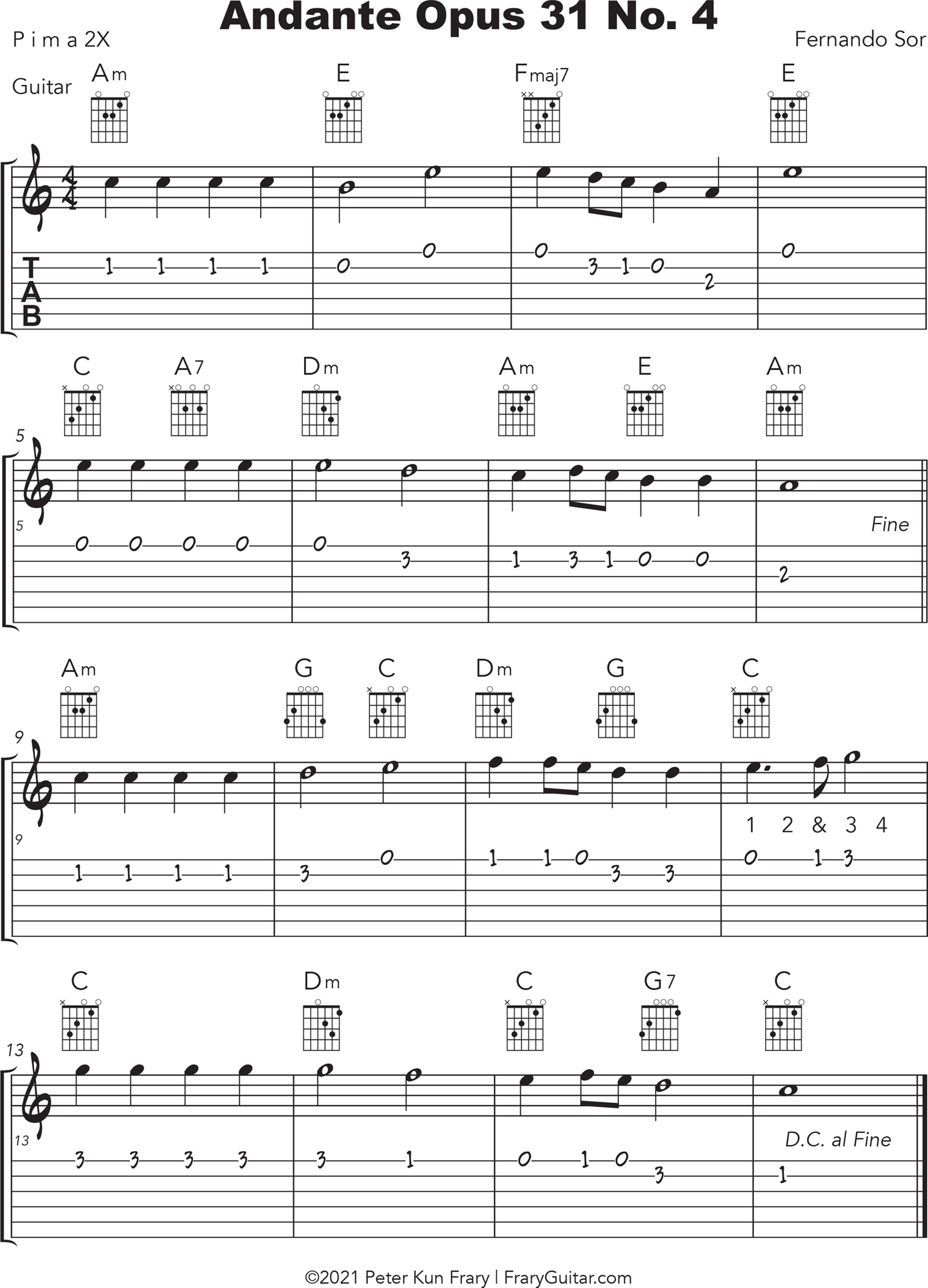
Today's tutorial debuts a new rhythm and arpeggio pattern. Afterwards, you’ll take on Andante, Opus 31 No. 4, a Classical work by Fernando Sor (1778-1839).
The Gore Family | Johan Joseph Zoffany, 1733–1810 | Music making was an essential part of Classical era domestic life. | Yale Center for British Art
Melody
The melody of Andante Opus 31 No. 4 is more intricate than prior offerings but will fall under your fingers easily due to the slow tempo.
Listen to the Track
Andante Opus 31 No. 4 | Frary Guitar Duo
In the video, the melody is played note for note per the score. P-i-m-a 2X (scroll down for details) is used for the chords.
Dotted Quarter Note
Andante introduces a new rhythm at measure 12: dotted quarter note followed by an eighth note. Here's how this combination sounds (audio repeats four times):
Dotted Quarter Note Counting
In the above example, the dotted quarter note receives 1 1/2 beats: it sustains from beat 1 through the first half of beat 2. Gauge placement of the eighth note by saying “and” between beat numbers. The eighth note falls on the “and” or the second half of beat 2. Practice counting and clapping the rhythm until smooth. The goal is to internalize this rhythm so it comes out naturally.
D.C. al Fine
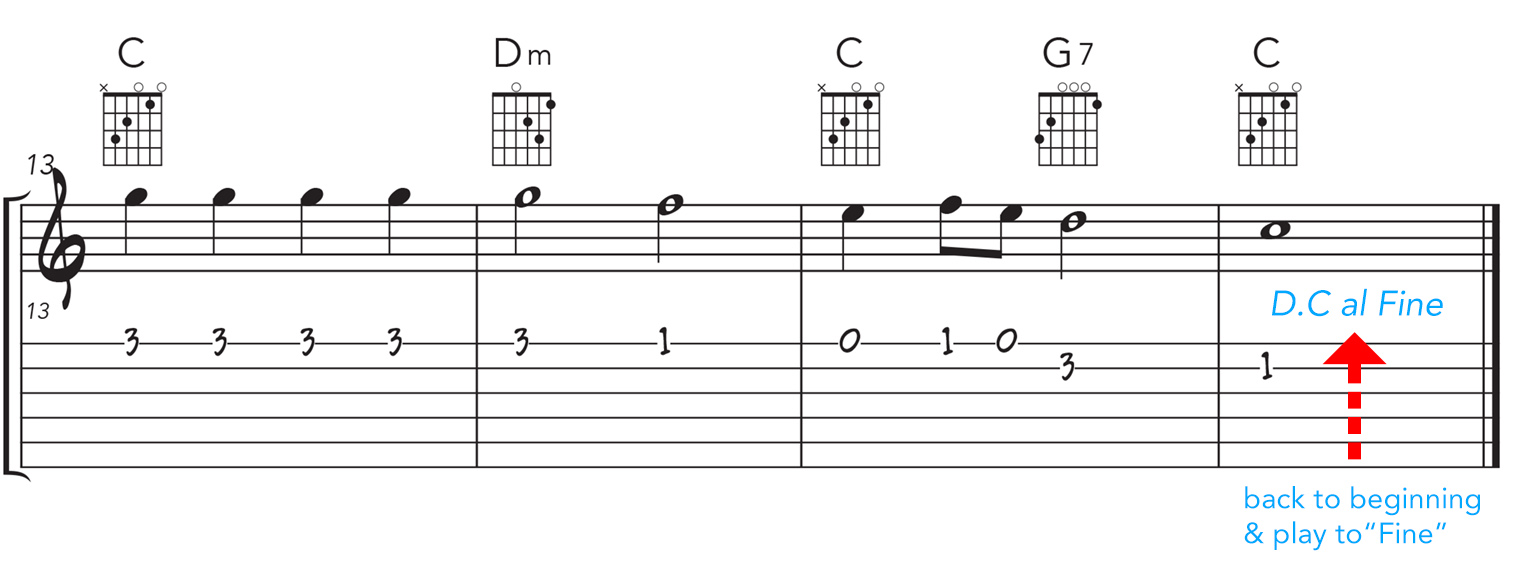
Andante uses a repeat symbol: D.C. al fine—an abbreviation of Da Capo al Fine. This Italian phrase means to return to the beginning and play until the word "fine."
Thus, once the fourth line is completed, return to the beginning (Da Capo) and play until the end of the second line (fine).
Play the Melody Now!
Practice the melody until smooth. Play along with the audio track or video to check melodic and rhythmic accuracy.
Andante Op. 31 No. 4 | Melody only—play along!
Once the melody of Aura Lee is mastered, work on the chords.
Chords
Andante only has one new chord, E, so you'll be on familiar harmonic ground. For this piece, you'll play the chords with the P-i-m-a 2X arpeggio. This pattern is designed for quadruple meter (4/4 meter).
P-i-m-a 2X "How to" video for Andante | Peter Kun Frary
P-i-m-a 2X Arpeggio
An arpeggio accompaniment complements the serene melody of Andante perfectly. As with any new arpeggio pattern, practice it on the open strings until smooth and burned into your reflexes.
P-i-m-a 2X | Practice on the open strings first.
P-i-m-a 2X Arpeggio Step by Step
Thumb (p) plucks the lowest bass note of the chord (root)
Index (i) plucks the third string
Middle (m) finger plucks the second string
Ring (a) plucks the first string
Repeat the above.
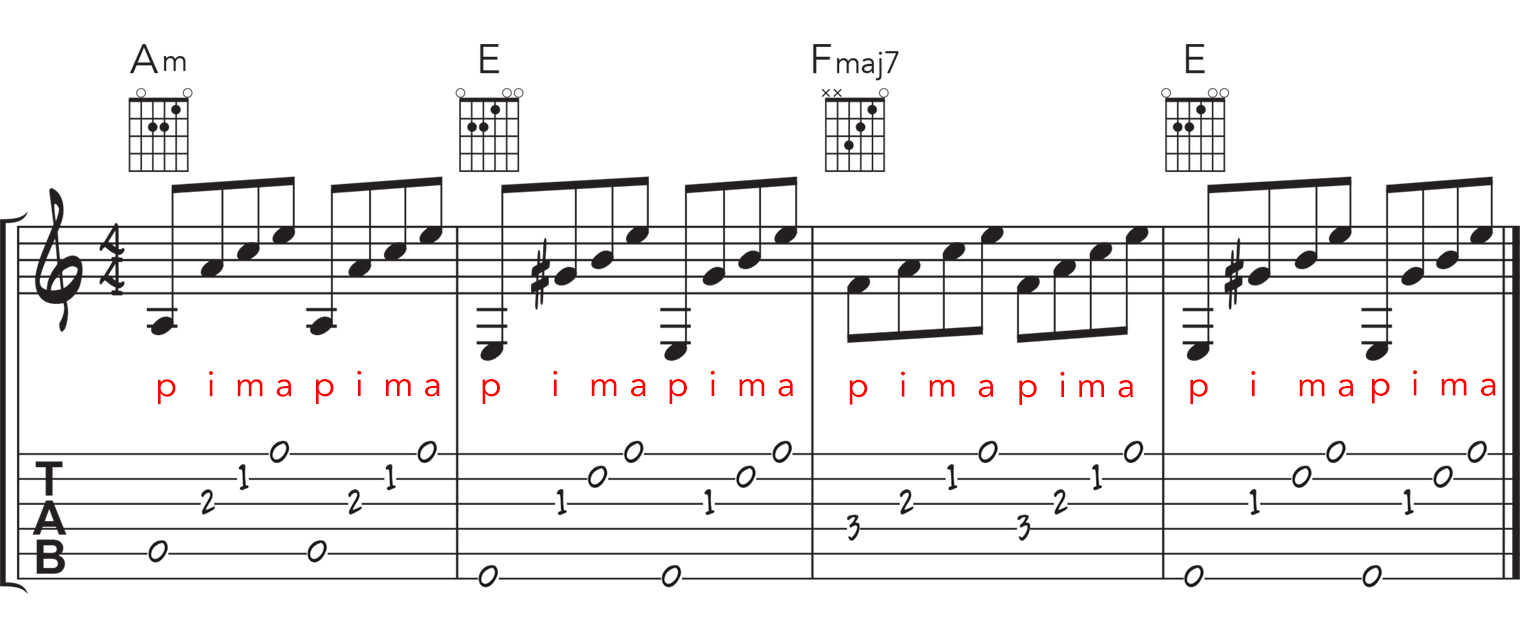
In 4/4 meter, the right-hand finger sequence of p-i-m-a is played twice per measure, resulting in a flow of eighth notes. P-i-m-a 2X is ideal for a ballad and, compared to strumming, is easier to balance with a melody played on another guitar.
Now that you've mastered P-i-m-a 2X on the open strings, take a closer look at P-i-m-a 2X within the context of Andante. Here's the first line notated with the P-i-m-a 2X arpeggio. The audio track includes the entire piece, following the P-i-m-a 2X pattern, albeit not fully notated here.
Role of the Thumb
The i-m-a part of the P-i-m-a pattern is played on the third, second and first strings for all chords. However, the thumb switches bass strings depending on the chord. Why? The thumb's role is to create a bassline by plucking the root or lowest indicated note of the chord. For example, pluck the fifth string for an Am chord, the fourth string for a Dm chord, the sixth string for the E chord, etc.
Which Bass note?
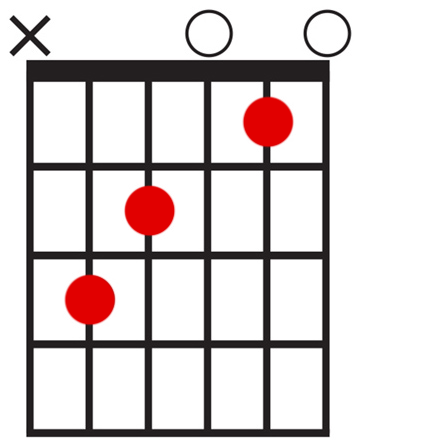
How do you know which bass note to play? The thumb plays the lowest indicated string on the left side of the chord diagram. Watch the video below for further explanation of the thumb's bass role.
Down 2X Strum
If arpeggios aren't to your liking, the down 2X strum (two strums per measure) works well. You can mix P-i-m-a 2X and the Down 2X Strum for creative effect.


 Melody
 Listen to the Track
 Dotted Quarter Note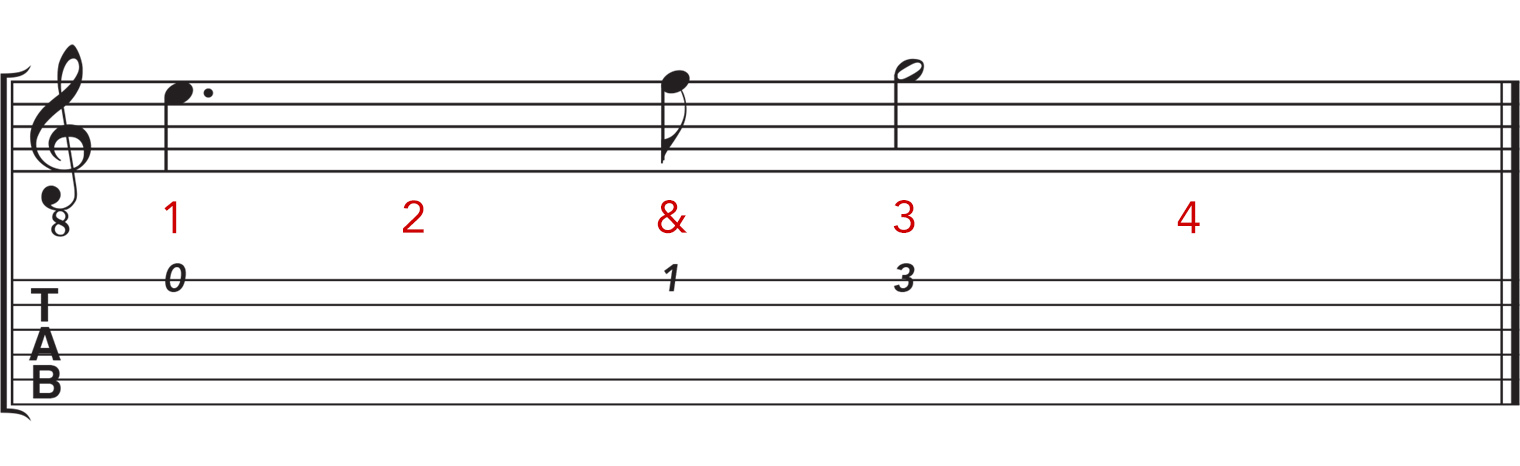
 Chords
 P-i-m-a 2X Arpeggio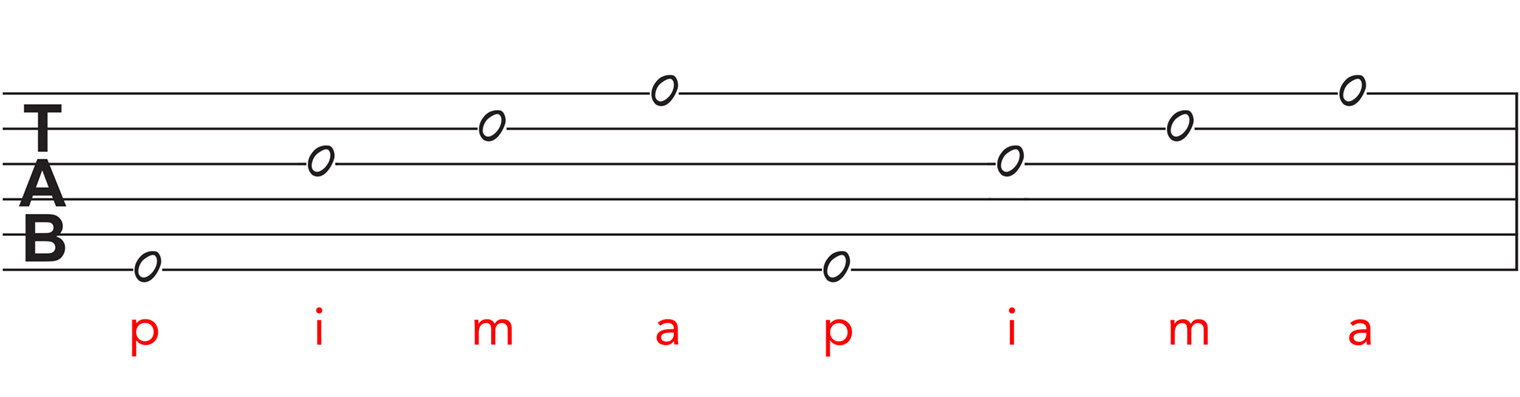
 Role of the Thumb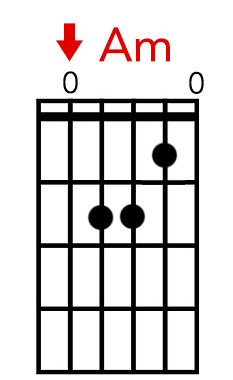
Down 2X Strum
Play the Chords Now!