|
.
Sigma 18-50 2.8 DC DN Contemporary
For Canon R Series APS-C Cameras
Peter Kun Frary
.
.
The Sigma 18-50 2.8 DC DN Contemporary, released in summer 2024, is an RF mount version of a similar lens marketed for Sony and Fuji mounts in 2021 and 2022. It covers a 2.78X zoom range from wide to telephoto, similar to 29 to 80mm on full-frame, making it ideal for general use. If you’re seeking a compact lens for hiking and travel with a Canon APS-C R series camera, this lens may be for you. Here are my thoughts on this Sigma after two years of shooting.
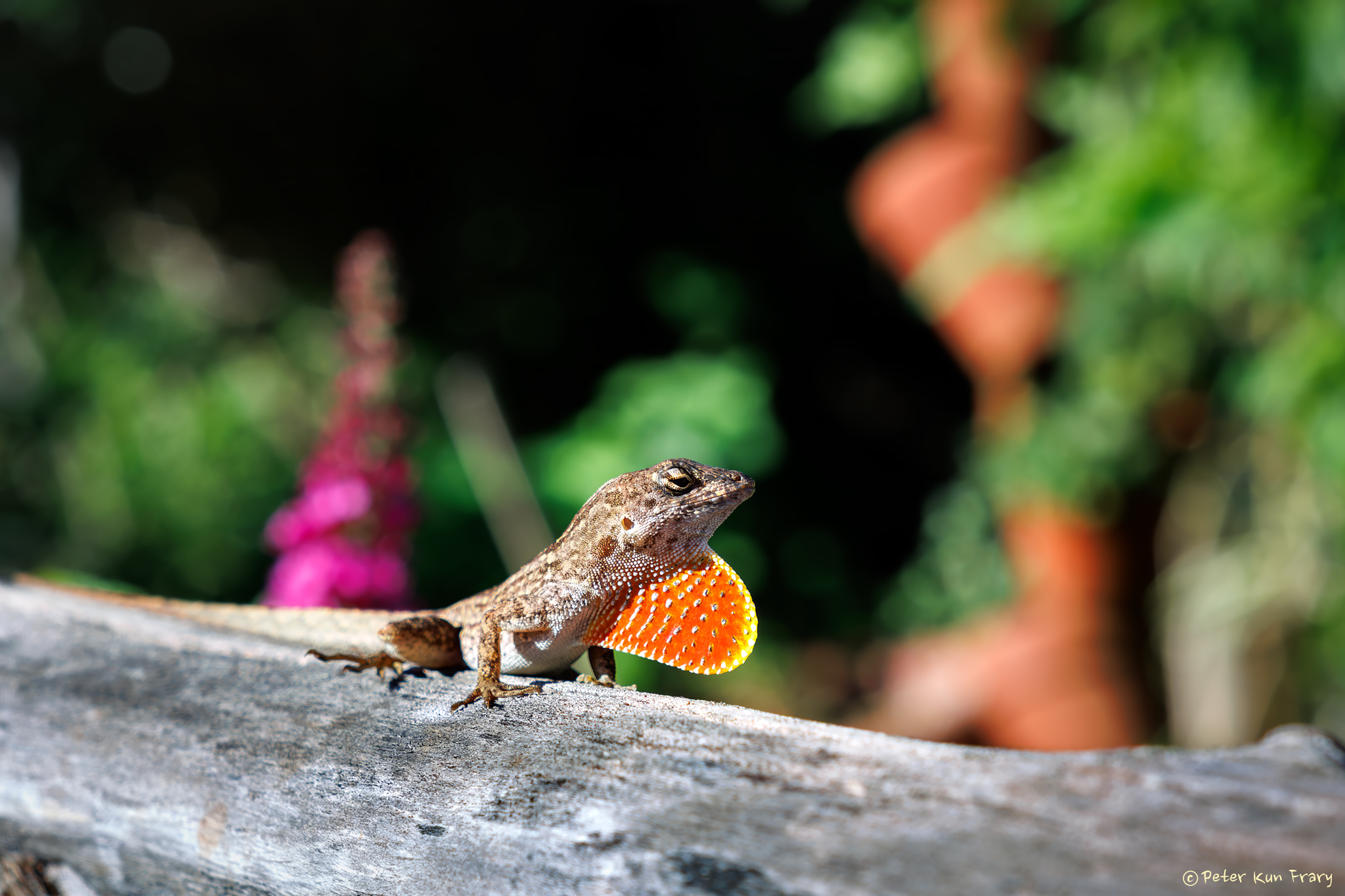
Anole | EOS R7 and Sigma 18-50 2.8 DC DN at 50mm, F5.6, 1/320, ISO 100
This review consists of my opinions and observations as a hobbyist. No scientific measurements or MFT charts are found here.
 Compatibility
The Sigma 18-50 2.8 DC DN in RF mount lens works on all Canon EOS R system cameras, but is optimized for cameras with APS-C (1.6X) sensors such as the EOS R7, R10, R50, and R100. Sigma's acronym, DC, stands for digital crop (designed for APS-C cameras). DN stands for Digital Neo, new digital (designed for mirrorless cameras). Full-frame R cameras such as the EOS R and R5 reduce sensor coverage to APS-C.
This lens is not compatible with Canon SLR, DSLR, and M series cameras.
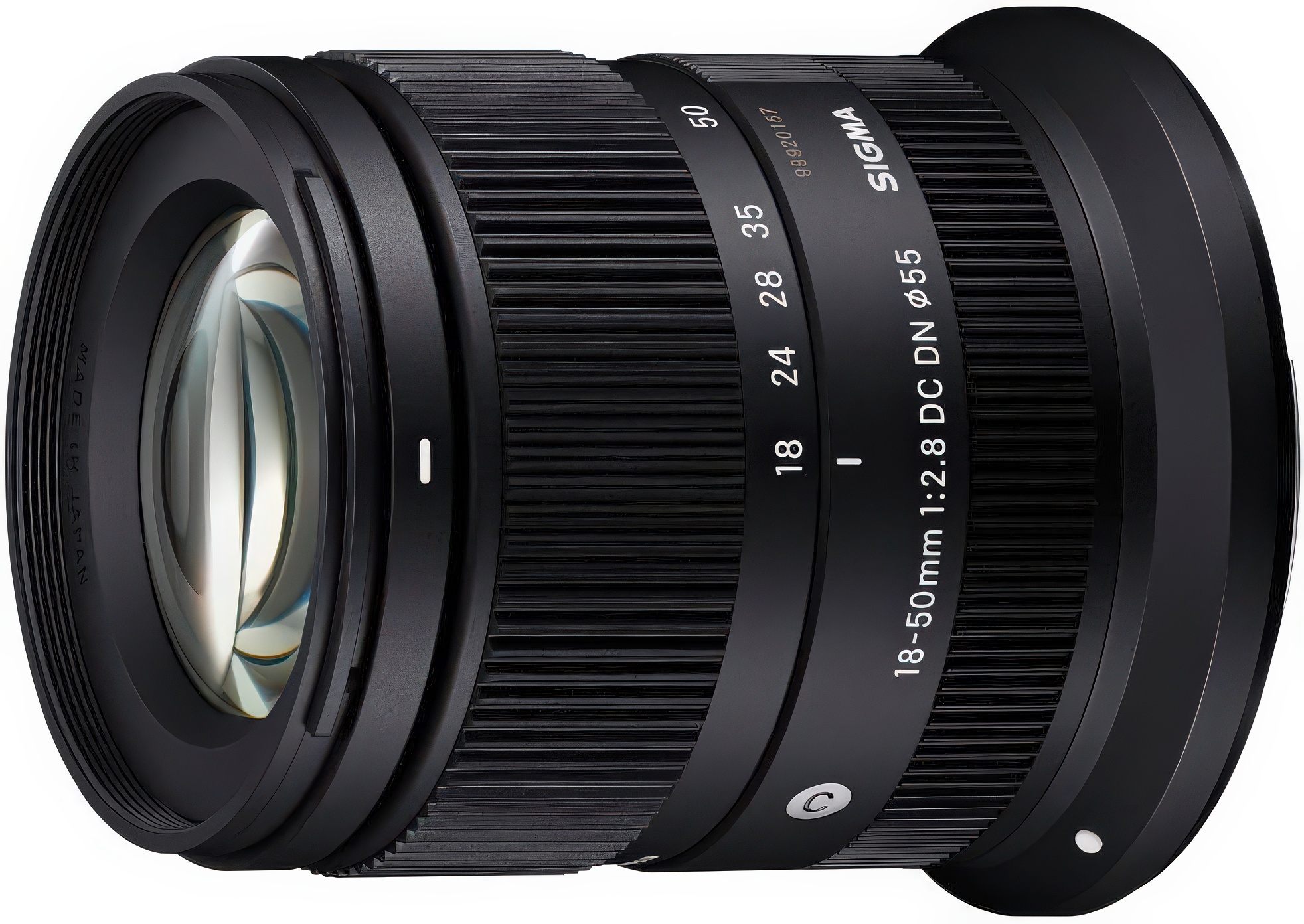
Sigma 18-50 2.8 DC DN | Photo courtesy Sigma Corp.
 Construction
The barrel design is comprised of a short nested barrel within a larger cylinder. The plastic barrels feel solid and durable. There are no switches, distance scale, or DOF scale. The matte black finish is accented with white silkscreened labels in a condensed sans-serif typeface. Component fit and finish are excellent.
A rubber gasket adorns the beefy chromed brass mount, enhancing weather resistance. The exterior design blends perfectly with Canon R7 styling.
Balance is very good on a R7, and the rings are easy to access and turn.
R7 and Sigma 18-50 2.8 DC DN | Photo courtesy Sigma Corp.
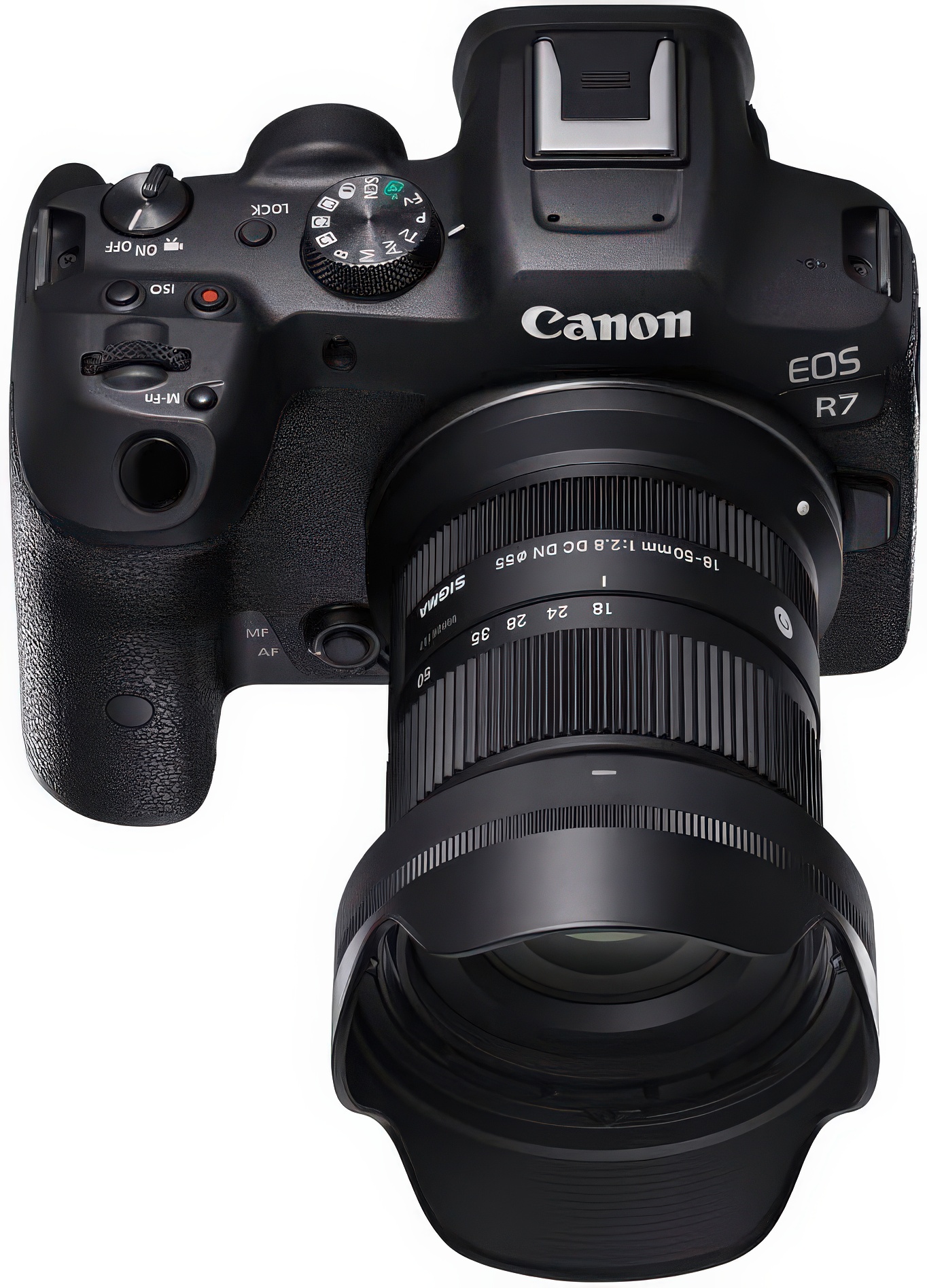
The optical design—13-elements in 10 groups—is identical to the earlier Sony and Fuji mount versions. The size, weight, and shape are similar, although cosmetic differences exist due to mount specifications. For example, the Canon version has a bigger flange to accommodate the larger diameter of the RF mount, resulting in a barrel that is narrower than the mount diameter.
 Zoom and Control Rings
Zoom, manual focus, and control rings are ribbed and look integral to the barrel. The rubberized zoom ring is large, grippy, and smooth turning. After two years of use, there are no signs of zoom creep. The clickless control ring—located near the flange—is small and rotates smoothly.
At 18mm the single nested barrel is flush with the end. Racked out to 50mm, it extends, adding about 24mm in barrel length.
Taro Droplets | R7 and 18-50 2.8 DC DN | F5, 1/250, ISO 100

 Focus
The 18-50mm 2.8 DC DN uses a stepping motor or STM in Canon speak. Focusing is smooth and quiet in one-shot. Tracking a subject with AI Servo or Movie Servo is peppy and surefooted. Native Canon autofocus protocols such as face and eye detection, vehicle tracking, etc., are supported.
The AF motor drives an internal lens group, and the front element doesn't rotate or extend during focusing. AF is fast—fast enough to track swaying flowers, fleeing critters, and moving vehicles.
Unlike Canon RF lenses, the active AF area of the Sigma does not cover the entire frame. Instead, it offers about 80% coverage. I don't normally need AF in extreme corners, but the lack of 100% coverage feels like a deliberate hobble by Canon.
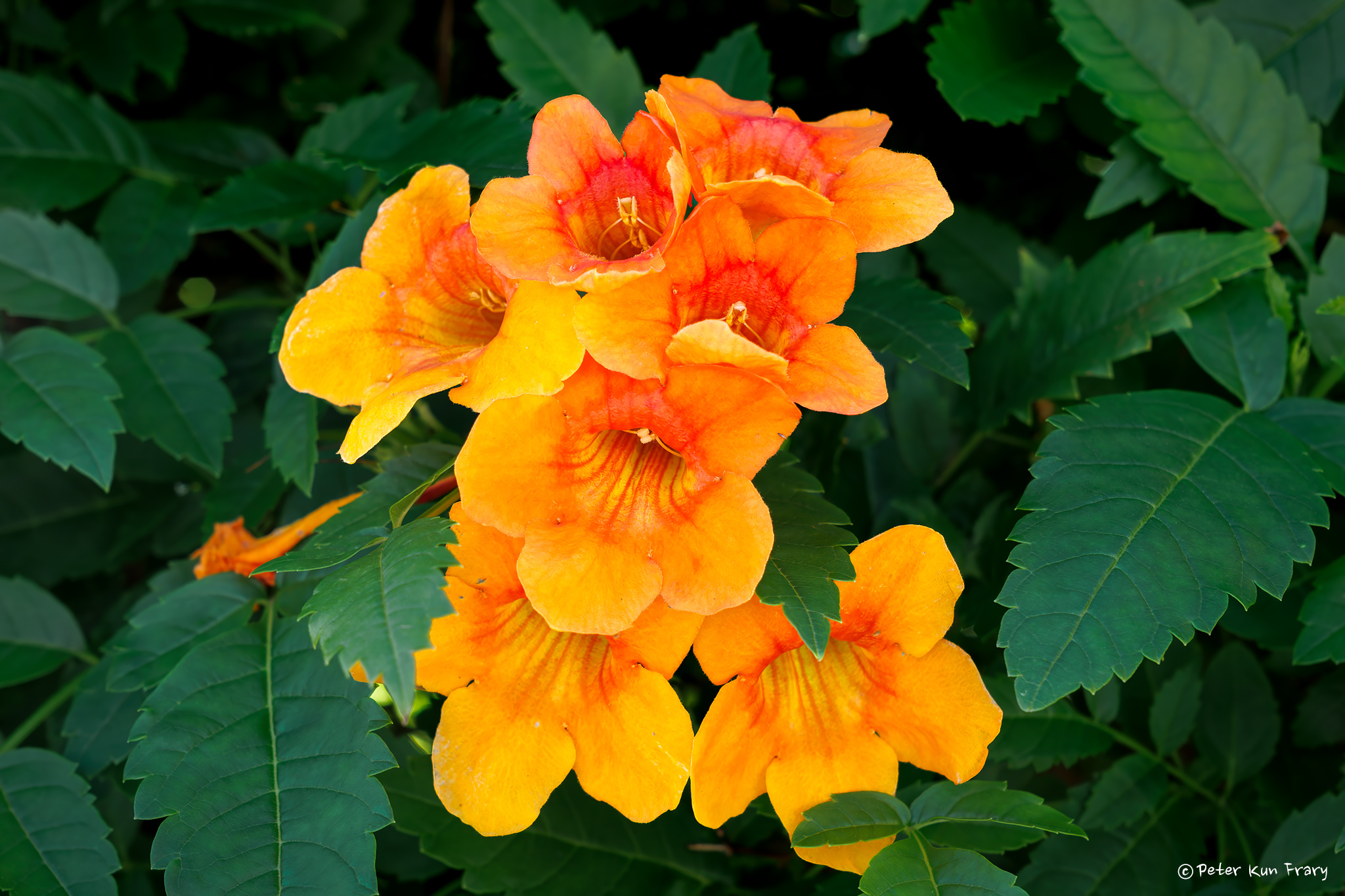
Trumpet Creeper | R7 and 18-50 2.8 DC DN at 18mm, F8, 1/80, ISO 250
 Manual Focus
There is no dedicated manual focus (MF) ring. Instead, a control ring is provided, programmable for camera functions such as exposure compensation, AF area patterns, manual focus, etc. I assumed toggling the Focus Mode Switch on the R7 to MF would enable manual focus. I was wrong. It does nothing.
To enable the control ring for manual focus, it must be set up in the TAB menu. On the R7, open the TAB menu, tap the AF icon, tap menu 6, and enable “use as focus ring” under the “focus/control ring” category. Once enabled, manual focus works anytime the EVF or rear screen is active. When you half-press the shutter button while turning the control ring, a distance scale appears in the EVF. If you half-press the shutter button without turning the control ring, AF works normally.
Waiʻanae Range | EOS R7 and Sigma 18-50 2.8 DC DN | 50mm, F2.8, 1/3200 and ISO 100 | I tested F2.8 on landscapes and was pleased how sharp it was.

 Control Ring Mapping
If manual focus isn't needed, the control ring may be programmed for other functions. In the case of the R7, a choice of fourteen camera functions is available.
- Press Menu button, select AF tab, tap menu 6 and set Focus/control ring to CONTROL.
- Next, open the
 Custom Functions icon and select menu 3.
- Select Customize dials.
- Once in the Customize dials screen, select control ring.
- Finally, set the control ring to the desired function—
 ,  ,  ,  , etc.
I choose direct  AF pattern selection. I often jump between single-point and area focus patterns, so having this function on the lens is faster than using buttons and wheels on the camera body. The control ring works whenever the EVF or rear screen is activated.
 Image Quality
The Sigma 18-50 2.8 DC DN performs well with the extremely demanding 32.5 MP sensor of the R7. Wide open at F2.8, there was edge-to-edge sharpness throughout the zoom range, i.e., relatively little image quality degradation near frame edges. Sure, corners are a little softer wide open at 18mm. However, the mild periphery softness sharpens up quickly as the lens is stopped down. Beyond F5.6, there was no obvious improvement. Indeed, at 50mm, it is so sharp af F2.8 that stopping down barely made a difference.
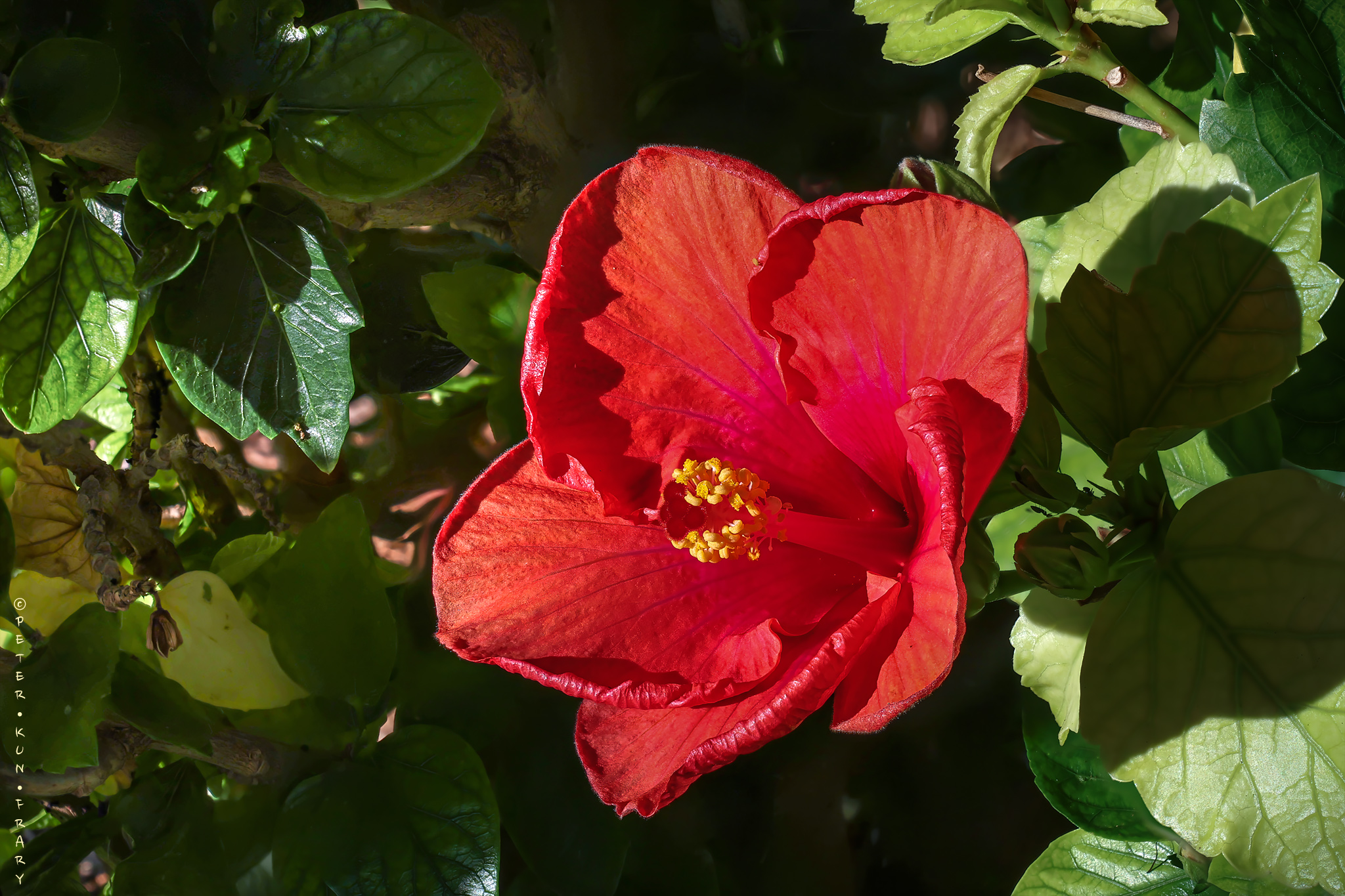
Hibiscus | EOS R7 and Sigma 18-50 2.8 DC DN | 50mm, F7.1, 1/500, ISO 100
 Quasi Macro
Obviously, this is not a macro lens. However, it focuses down to .36x—good enough for flowers and small products. At macro distances, contrast and sharpness are surprisingly good for a compact zoom. The corners are a bit softer but no biggie for typical centered subjects. Realize that .36x happens at 12.1cm (4.8") and 18mm, so it may be tricky to get proper lighting on your subject. With that said, I had no problems shooting garden images in bright light.
The hibiscus image above is a 20-image focus bracket, stacked in-camera. The Sigma handled the brutal 20 FPS electronic shutter of the R7 like a champ.
Aberrations
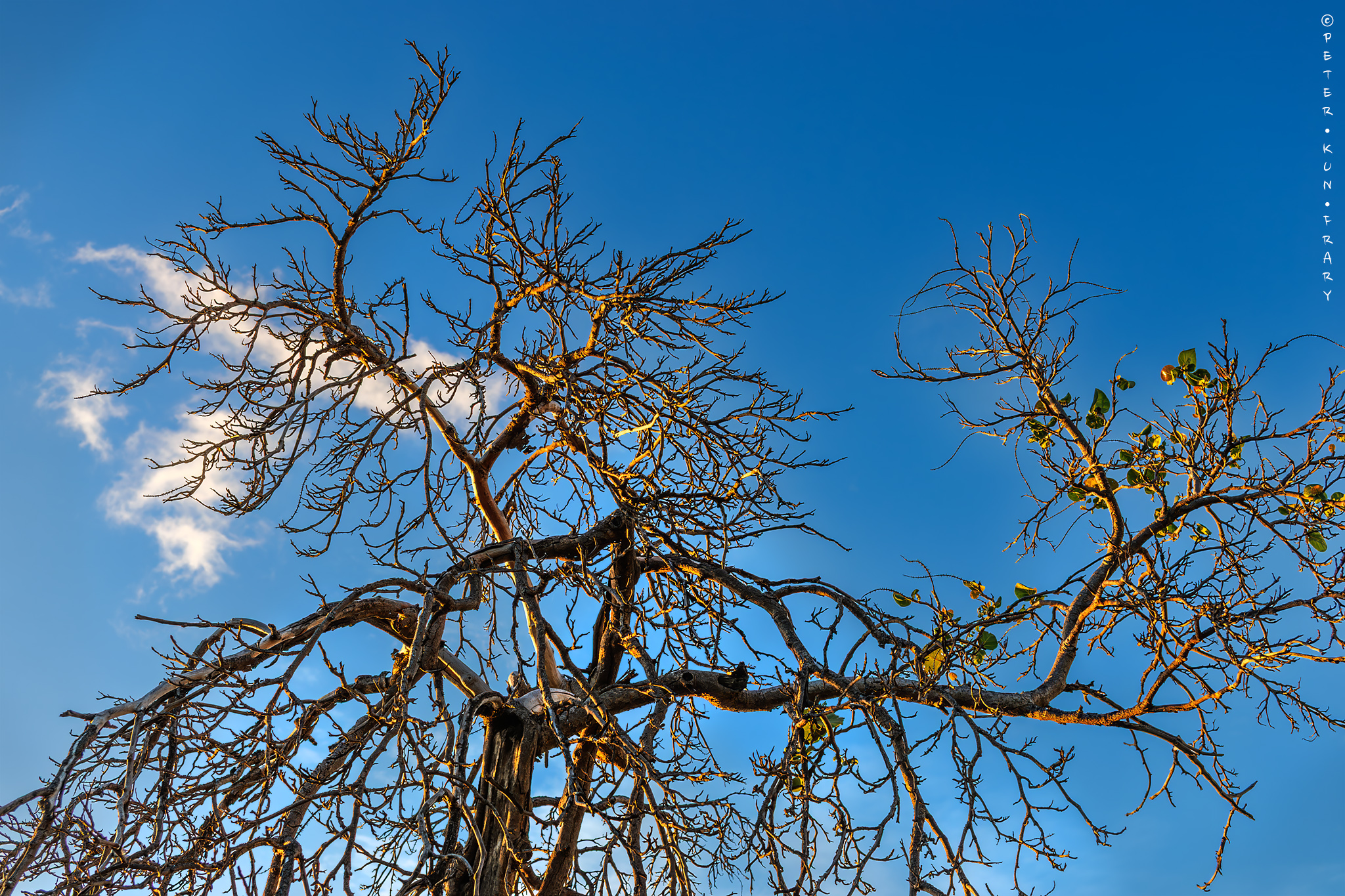
Chromatic aberration (CA) is well-controlled and is rarely noticeable. I tried to find CA, but it was challenging to spot. A tiny amount of CA is sometimes barely visible along the edges of tree branches against a bright sky. Well, if viewed at 200% or higher. What little CA exists is nixed as the lens is stopped down.
Branches | R7 and 18-50 2.8 DC DN | 24mm, F5, 1/200 sec., ISO 100
Coma, the bane of wide zooms, is also in short supply. At F2.8 across the zoom range, points of light along the periphery look like, well, points of light.
 Light Falloff
You may not notice any light falloff because Canon's DPP4 and Lightroom apply the lens profile and automatically remove vignettes. In-camera JPEGs are automatically corrected as well. If you disable the profile, this lens exhibits a stop or more of light fall-off when shot wide open. I usually prefer images with darker corners and edges and often disable Profile Corrections for a natural vignette.
Flare
While shooting Hawaiian sunsets and spectral reflections, ghosting and flare were minimal or nil. High-contrast night scenes with street lights were usually immune to flare. My Sigma lenses from decades ago were flare-prone, so I was delighted to observe such a big improvement.
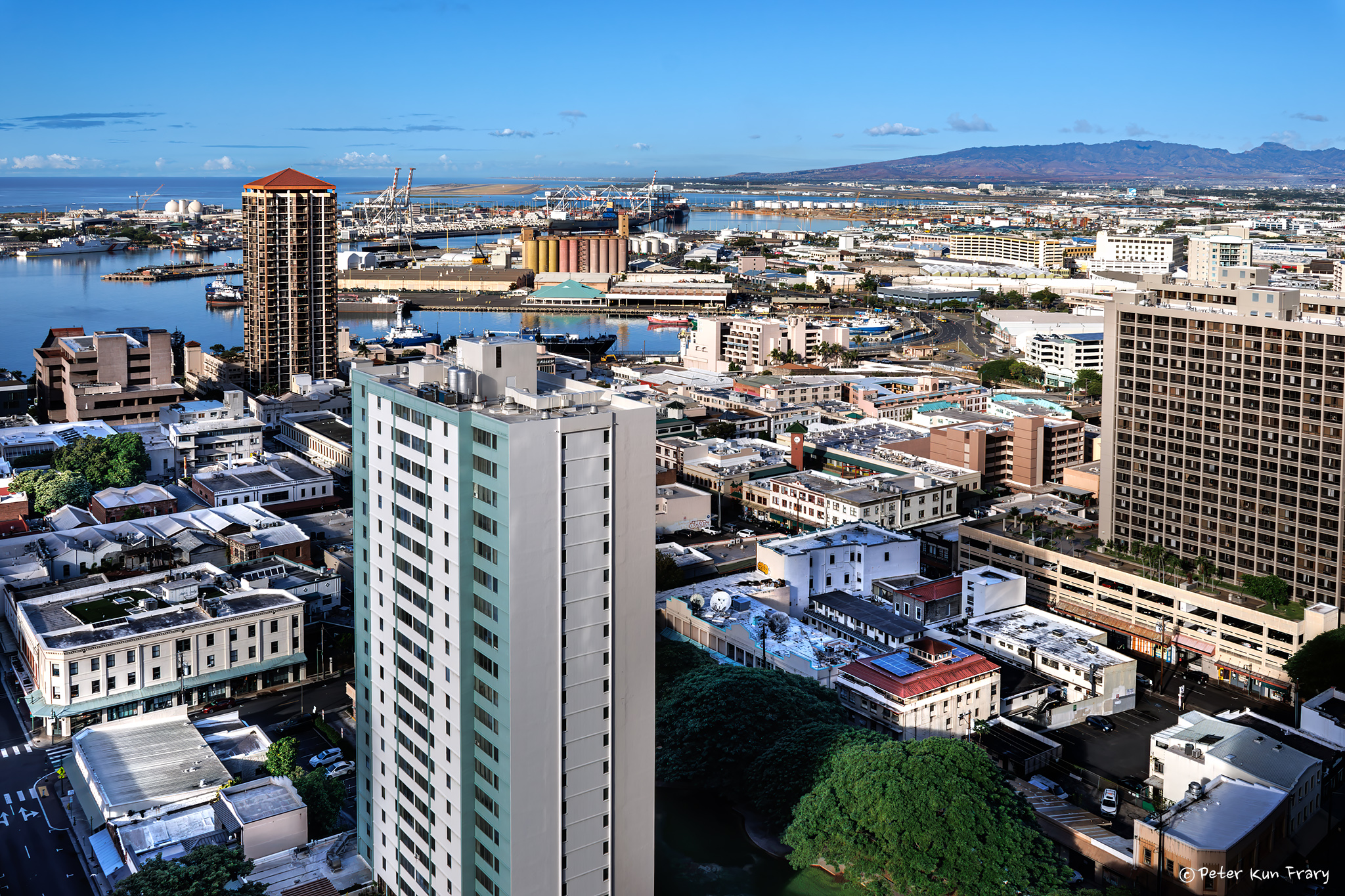
Pier | EOS R7 and Sigma 18-50 2.8 DC DN | 50mm, F8, 1/640 sec., ISO 100

In flare prone lighting, remove unneeded filters and use a hood to help block stray light. I sometimes use my hand or hat to block stray sunlight.
 Comparisons
My Canon R7 came with the RF-S 18-150 3.5-6.3 IS STM. How does it compare with Sigma beyond differing zoom ranges and apertures? First, they are in the same ballpark in terms of sharpness. Yes, the Sigma is a little sharper than the RF-S 18-150 3.5-6.3 IS STM, especially along the periphery, but the difference wasn't obvious on a 27-inch 5K Apple Studio Display until I zoomed to 100% and pixel peeped along the periphery.
AF speed and accuracy are close between the two lenses—a draw. However, the Sigma is built better, weather-resistant, and has a smoother zoom ring. The Canon has closer macro focus: .44x at 50mm, so a more useful flower and small critter lens. Having F2.8 across the zoom range of the Sigma is a biggie and the main reason I bought it.
The main advantage the Canon RF-S 18-150 3.5-6.3 IS STM has over the Sigma is its built-in stabilization. IS and IBIS combined provide a silky gimbal-like smoothness for hand-held video. With only IBIS, the Sigma is noticeably less smooth. Sigma missed an opportunity by omitting optical stabilization. When I'm shooting video, I grab a Canon lens with IS, not the Sigma.
Finally, the many-fabled Canon EF-S 17-55 2.8 IS USM was a wonderful lens in its day, deadly sharp on my 8MP 20D. However, the Sigma is sharper, less prone to flare and coma, and much smaller and lighter. The Canon has the advantage of a larger zoom range and optical stabilization (IS), but suffers from pronounced shutter shock vibrations.
Peace Lily | R7 and 18-50 2.8 DC DN at 50mm, F6.3, 1/400 and ISO 100

 Image Stabilization
There is no stabilization (IS) built into the Sigma 18-50 2.8 DC DN. With only IBIS for stabilization on the R7, hand-held Sigma clips are not as smooth as those taken with IS and IBIS combined, e.g., R7 and Canon RF-S 18-150 3.5-6.3 IS STM. Worse yet, most Canon APS-C cameras lack sensor-based stabilization (IBIS), leaving video and stills at the mercy of caffeine, beer, heavy breathing, and trade winds.
The R7 is Canon's only APS-C camera with IBIS, and the company claims up to 8 stops of stabilization. Of course that figure varies with focal length and lens design. My experience is 2 or 3 stops of IBIS stabilization with the 18-50 2.8 DC DN. Two or 3 stops of stabilization is welcome, but I've gotten progressively less steady as I age. Indeed, I get more blurry images with the Sigma than with the IS-blessed Canon RF-S 18-150 3.5-6.3 IS STM.
Sigma probably omitted stabilization—OS in Sigma speak—to hold a price point and trim off a few millimeters of barrel bulk. However, the new Sigma 50-120 2.8 DC OS has lens-based optical stabilization and manages to remain palm-sized and lightweight. And IBIS and OS on the R7 works like a dream. I'd gladly pay more for an 18-50 2.8 DC DN with OS.
 Lens Hood
Hoods help reduce flare by preventing stray light from striking the front element of the lens. They also provide front element protection from bumps, greasy fingers, and dust. Unlike Canon, Sigma includes hoods for all its lenses. Indeed, a petal-type hood (LH582-02) was ready and waiting the product box.
Sigma LH582-02 Hood | Photo courtesy Sigma Corp.
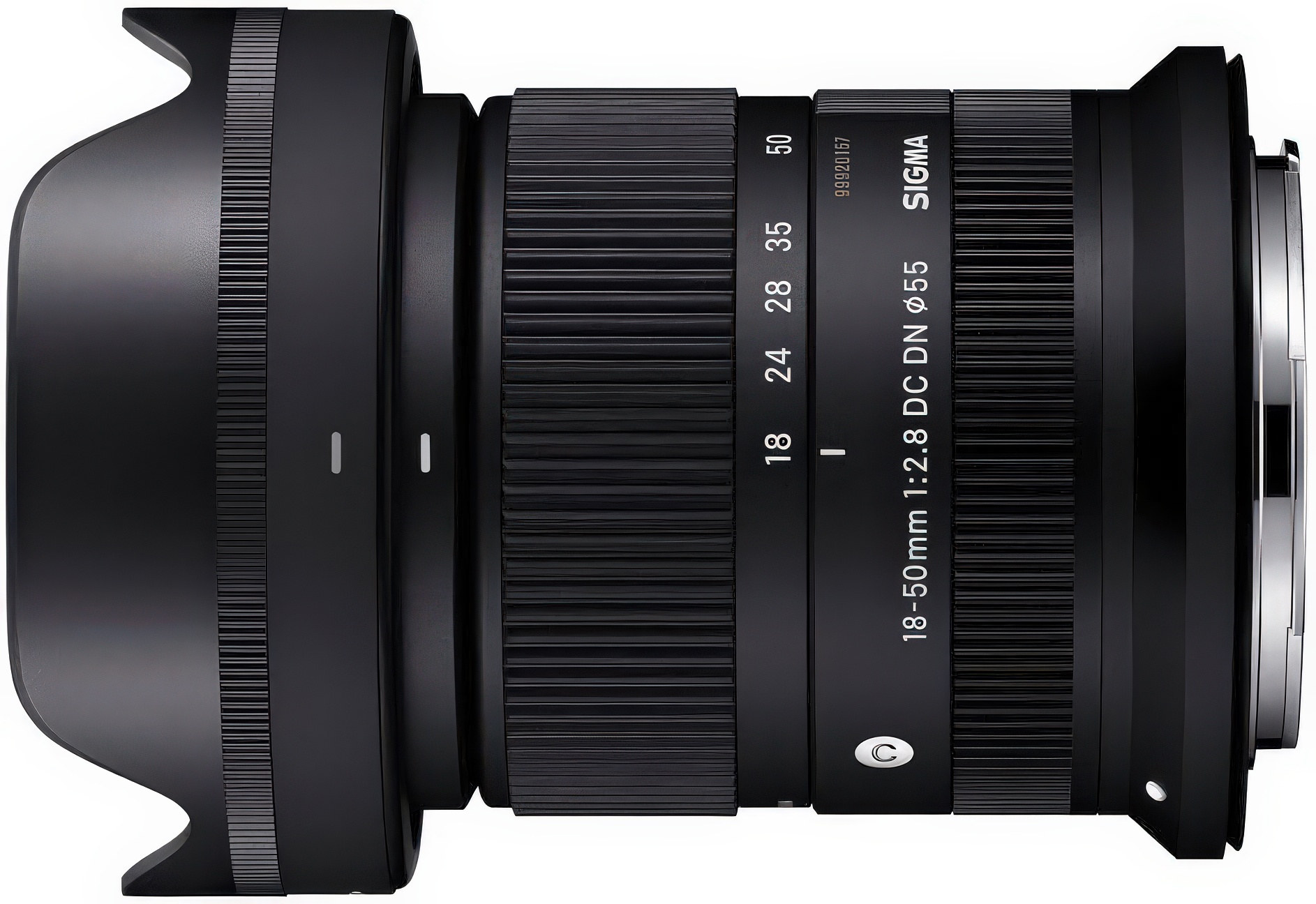
Fit and finish of the hood are very good: quality plastic, fingerprint-resistant matte black exterior, flat black interior paint to nix reflections, and is cosmetically matched to the lens.
Finally, the hood may be reverse-mounted for more compact storage. With that said, the hood is so tiny I leave it mounted and never reverse it since it fits in all my bags. Heck, it even fits with the lens pointed downwards (vertical) in the diminutive 6L Peak Design Everyday Sling.
 Firmware
Lens firmware updates may be installed using an SD card, USB, or Wi-Fi. I used a tried-and-true method: download firmware from Sigma's website and copy it to the root level of an SD card. Here are the update steps I followed on the R7:
- Download firmware to my Mac and drag to the root level of the SD card.
- Insert the SD card and power on the camera with Sigma lens mounted.
- Open the TAB menu.
- Tap the
 icon, open menu 2, and select “firmware” from the menu list.
- Press
 SET and select “lens” from the list.
- Use the physical controls of the camera to start the firmware update (touchscreen disabled).
This method beats shipping the lens to Sigma for a ROM update or using the hockey puck USB dock!
Friend | R7 and 18-50 2.8 DC DN at 50mm, F5.6, 1/320, ISO 100

 Final Blurb
I captured vivid and sharp images in most situations I threw at the Sigma 18-50 2.8 DC DN: dim light, sweeping landscapes, smokey casinos, and misty rain. I love the compact size, F2.8 aperture throughout the zoom range, smooth and peppy autofocus, weather resistance, and sharp optics. It's a looker and, combined with my R7, it made for a wonderfully versatile and lightweight travel and wandering around town combo. However, if image stabilization (IS) is a crucial aspect of your shooting style, you'll need to consider another lens.
Please support this site by purchasing this lens at Amazon.
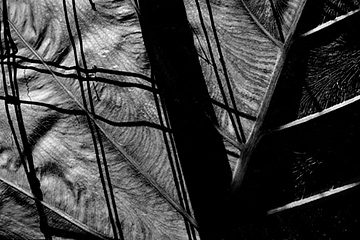
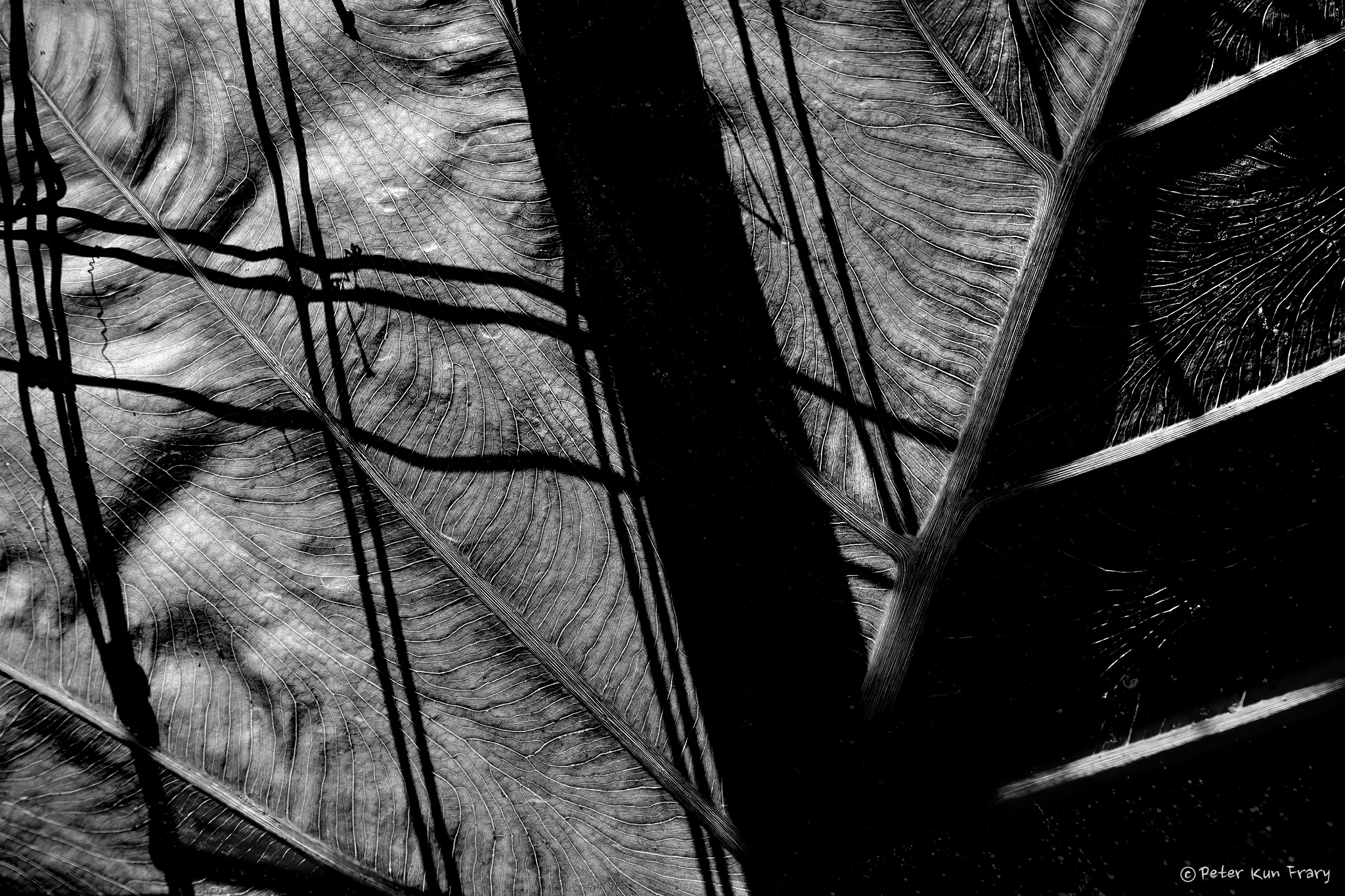
Taro and Fence Shadows | R7 and 18-50 2.8 DC DN at 50mm, F5.6, 1/320 and ISO 100 | Converted to black and white in Photoshop Classic.
 Features and Specs
- Focal Length: 18–50mm
- Maximum Aperture: f/2.8
- Aperture range: f/2.8 – f/22
- Angle of View: 73.4° – 30.0°
- Lens Construction: 13 elements in 10 groups (1 SLD and 3 aspherical)
- Super Multi-Layer Coating
- Brass bayonet mount with rubber dust and splash resistant seals
- Filter Size: 55mm
- Native algorithms for AF, communication and in-camera aberration correction (i.e., not reverse engineered).
- Compatible with lens aberration correction in Lightroom, DPP4, etc.
- 7-blade rounded diaphragm
- Autofocus: Inner element focus with stepping motor
- Minimum Focusing Distance: 12.1cm (4.8") at 18mm and 30cm (11.9") at 50mm.
- Maximum Magnification: .36x or 1:2.8 (at 18mm)
- Mount: RF | APS-C coverage compatible with all R series cameras
- Accessories: lens hood LH582-02, front cap LCF-55mm III, rear cap LCR II

- Diameter x Length: 69.2mm x 74.5mm
- Weight: 300g (10.6 oz)


 Source Materials
Sigma 18-50 2.8 DC DN Instructions (0120-9977-88). Sigma Corp.
Created on October 28, 2026
Sample Images

©Copyright 2026 by Peter Kun Frary | All Rights Reserved
|
 •••••••
 •••••••
 •••••••
 •••••••
 •••••••